Trusted Semiconductor Manufacturing Explained: Understanding Secure and Reliable Chip Production
Semiconductors are essential components found in smartphones, computers, vehicles, communication systems, and many everyday technologies. As technology becomes more connected, the importance of creating secure and reliable semiconductor chips has increased significantly. This is where Trusted Semiconductor Manufacturing becomes an important topic.
Security matters most when chips take shape. Built right means built safe from start to finish. A careful process keeps flaws out, trust in. Making sure everything stays under watch stops problems before they begin. Reliability comes from strict steps followed every time. Hidden dangers get blocked by clear rules and tight checks. Integrity stands strong where control never slips.
Grasping the steps involved gives insight into building high-tech devices - security during manufacturing shows its weight when today’s tech runs on trust. What happens behind the scenes shapes what ends up in our hands.
Trusted Semiconductor Manufacturing Overview
Out of careful processes comes Trusted Semiconductor Manufacturing, building chip parts with tight control over quality and safety. Because performance matters, each piece must work right from start to finish. Reliability sticks around, not by chance, but through consistent oversight baked into every stage.
Fresh air flows through clean rooms where products take shape under watchful eyes. Checks happen at every turn to catch slips before they grow. Outside suppliers stay on a short leash with updates coming daily. Proof comes only after samples face heat, stress, and time.
What A Semiconductor Is?
Between insulators and conductors sits a class of stuff called semiconductors. Powering electronics happens when these materials shape tiny chips and complex circuits.
Common semiconductor materials include:
- Silicon
- Gallium arsenide
- Silicon carbide
- Germanium
Electrical behavior gets shaped by these substances, which also back today’s tech operations. While they manage signal flow, their role extends into everyday device performance.
Manufacturing trust matters because people need to believe what they see?
Few notice it at first, yet when gadgets grow smarter, worries about where parts come from start showing up. Hidden flaws in materials matter more once circuits do harder jobs.
Trusted manufacturing helps address areas such as:
- Product consistency
- Secure production environments
- Manufacturing transparency
- Quality verification
- Reduced operational risks
Trusted Semiconductor Manufacturing Matters
Factories known for steady work help sectors needing electronics they can count on. Machines built right keep systems running where failure isn’t an option.
Some important benefits include:
Improved Reliability
Over time, parts keep working right because rules in making them are tightly followed.
Better View of Supply Chain
Fresh eyes on each step of making things, along with where parts come from, show clearer pictures. Where stuff is built matters just as much as how it moves through checks.
Enhanced Quality Standards
Frequent checks during production keep results steady. Testing at every stage ensures uniform output.
Advanced Technology Support
Out of today’s tools, smart machines run best when chips work without fail. Cars that think need circuits they can trust. Systems talking to one another? They depend on tiny parts holding up under pressure.
Trusted Semiconductor Manufacturing Key Aspects
Several factors contribute to a trusted semiconductor manufacturing process.
Key Aspect Quality Testing Supply Chain Monitoring Controlled Facilities Design Validation Process Audits Component Traceability Performance Reliability Material Tracking Production Stages Secure Manufacturing Chip Design Accuracy Procedure Review History Identification.
Security grows stronger when these pieces fit like parts of a puzzle. Each piece holds its place only because the others are there too.
Trusted Semiconductor Manufacturing Explained
Starting with a sketch, production moves step by step toward inspection. One stage follows another until the product is checked completely.
Chip Design Begins
Pinning down how things should work comes before drawing out the connections. What each part must do shapes the way lines are traced across the board.
Important activities include:
- Logic design
- Simulation
- Architecture planning
- Validation checks
Wafer Fabrication Begins
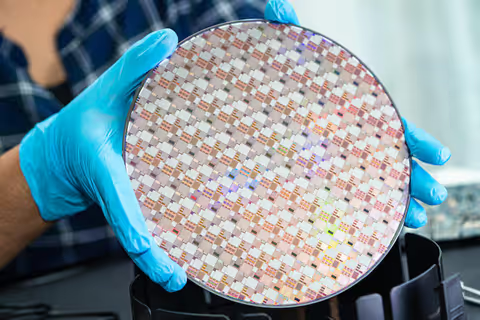
Pieces of semiconductor material become wafers through high-precision methods. Though delicate, each step shapes raw substance into thin discs. Because accuracy matters, machines handle most stages. From slicing to polishing, the process demands steady control. Even slight errors can alter performance later on.
Common fabrication activities include:
- Oxidation
- Photolithography
- Ion implantation
- Etching
This stage creates microscopic electronic structures.
Testing and Inspection
Faults might show up during checks on made wafers, revealing weak spots or flaws in function. Testing happens after production to catch problems that could affect how well they work. Every wafer gets scanned so errors don’t slip through unnoticed.
Testing may involve:
- Electrical measurements
- Functional checks
- Reliability analysis
Packaging and Assembly
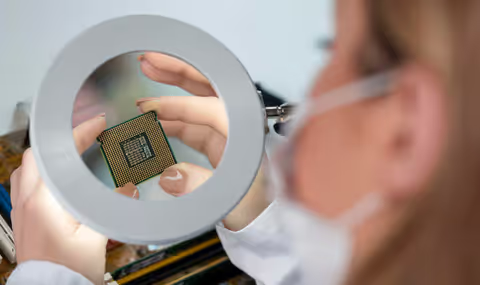
Once tested, the chips get sealed up before sliding into gadgets. Packaging happens next so they’re ready when needed somewhere else. Devices take them in only after everything checks out right.
Wrapped tight, packaging guards parts while linking them to what’s nearby.
Verify and Track Progress
Fresh off the line, each step gets logged so nothing slips through the cracks. Production details stick around in records, staying clear and traceable. What happens on the floor shows up later in reports. Every batch carries its story forward, piece by piece.
Fresh eyes on the process reveal more clarity in how things are made.
Trusted Ways to Make Semiconductors
Different approaches can support trusted manufacturing goals.
Internal Manufacturing
Organizations manage design and production within controlled facilities.
Advantages include:
- Greater process oversight
- Direct quality monitoring
- Internal security controls
Partner-Based Manufacturing
Factories sometimes team up with expert labs, yet still stick to their own checks. Though outside help is used, control stays in-house.
This method might offer:
- Technical expertise
- Process specialization
- Expanded production capabilities
Hybrid Approaches
Inside these setups, one part watches operations while outside teams handle making things. Not every piece comes from within - some arrive through partnerships elsewhere.
Built-in mix styles might just split the difference between adaptability and oversight needs.
Trusted Semiconductor Manufacturing Trends and Updates
Now things inside chip making keep shifting more often than before.
Increase in focus on supply chain transparency
Organizations are placing more emphasis on tracking component origins and manufacturing processes.
These days, tracking goods moves ahead with clearer oversight tools. New methods pop up regularly to sharpen what we see across global routes.
Advanced Chips Grow More Powerful
Built on tinier blueprints, production techniques evolve alongside speedier chip layouts. While performance jumps ahead, fabrication shifts underfoot - smaller spaces demand new ways.
Examples include:
- Artificial intelligence processors
- Automotive semiconductor systems
- High-performance computing chips
More Machines Doing Tasks
Factories now rely more on machines that run by themselves, helping tasks stay steady through tighter oversight of each step. While automation spreads, it shapes how evenly products come out every time.
Automation can support:
- Precision manufacturing
- Inspection accuracy
- Process monitoring
Sustainability Considerations
Finding ways to cut down on power needs is another path makers are walking. Efficiency gains in making things come through trying out fresh approaches.
common mistakes and important considerations
Grasping what trusted semiconductor manufacturing means often brings certain hurdles into view. A closer look reveals issues that pop up again and again. These obstacles shape how production unfolds behind the scenes. Spotting them early makes a difference down the line.
Ignoring Hidden Supply Chain Details
Faulty tools aren’t the only threat to smooth output. Equipment works well - yet disruptions still creep in through overlooked gaps. Hidden hiccups live outside the machines themselves. Dependability leans on what happens around them just as much.
Picking materials plus keeping tabs on steps matters just as much. Though often overlooked, how things move through production shapes outcomes in quiet ways.
Ignoring Testing Procedures
When checks get missed, problems often show up later. Mistakes slip through easier if nobody confirms each part. Overlooking small details might lead to bigger trouble down the line. Things run smoother when every piece is tested first. Skipping ahead sometimes means fixing more afterward.
Fault checks still play a key role in making sure chips meet standards.
Focusing Only on Production Speed
Rapid production should be balanced with quality control and process monitoring.
Sticking to a routine tends to help things last. What holds steady usually works better over time.
Limited Documentation Practices
When details are written clearly, it becomes easier to see what is happening behind the scenes. That kind of openness feeds into how products are checked during production.
Conclusion
One way to build dependable computer chips starts with careful oversight of how they’re made. Starting early, each step follows strict rules just enough to catch problems before they spread. Instead of guessing, checks happen all along - watching materials, tracking sources, making sure nothing slips through. Through constant review and real tests, these methods help devices we rely on keep working as expected.
Out of today’s tech demands grows a quiet reliance on steady chip making. When factories shift toward smarter electronics, solid fabrication practices hold things together behind the scenes. Look closely, then notice how each device runs without surprise hiccups. Built-in precision during creation keeps digital life ticking through endless links. It is why everything from sensors to servers behaves as expected, even when far apart.