How Artificial Intelligence Is Helping Chip Design: Guide to Modern Semiconductor Development
Artificial intelligence (AI) is changing many industries, and chip design is one of the most important areas benefiting from this technology. Computer chips, also known as semiconductors, are the foundation of modern electronics. They power smartphones, computers, vehicles, medical devices, and countless other technologies.
Tiny parts inside computer chips keep getting harder to arrange. Performance matters just as much as saving power, yet everything must fit into smaller spaces without failing. Machines that learn are now stepping in - speeding up choices, refining layouts, cutting guesswork along the way.
Out of nowhere, AI has started reshaping how computer chips are built. What’s happening behind the scenes actually affects everything from phones to factories. Lately, tools powered by machine learning have begun cutting down design time dramatically. Instead of months, engineers now see results in weeks. Hidden inside these advances? A shift in how problems get solved - less guesswork, more pattern spotting. Progress isn’t slowing either; each breakthrough opens another door. Even tiny improvements add up fast across billions of transistors. Behind today's fastest processors, smart software plays a quiet but critical role.
Understanding Chip Design?
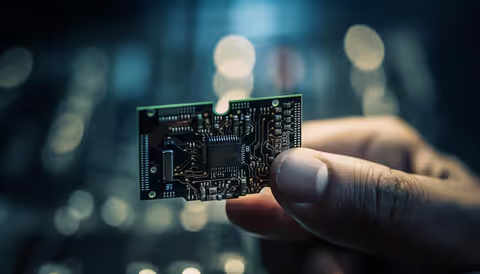
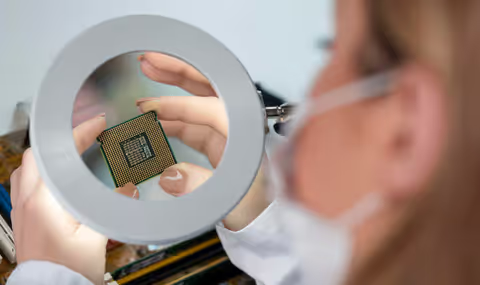
Inside tiny pieces of silicon, engineers build complex networks of switches and pathways meant to handle digital work. Tiny but packed full of parts - sometimes more than a billion - they fit into an area smaller than a fingernail. Instead of scattered parts, everything links precisely on one compact surface. Each layout follows strict rules so signals move quickly without errors.
The design process typically includes:
- Planning chip architecture
- Creating circuit layouts
- Testing performance
- Verifying functionality
- Optimizing power consumption
- Preparing designs for manufacturing
Chips keep getting smarter, yet older ways of building them often take too long, need heavy effort. Into that gap step AI tools - now showing up more, fitting in smoothly.
Artificial Intelligence in Chip Design
Computers acting smart - that’s what artificial intelligence means. These machines study information, spotting trends along the way. Outcomes get suggested based on what they’ve learned before. Decisions come not from people but code trained to respond. Predictions form through repeated examples fed into their design.
In chip design, AI helps engineers by:
- Processing large amounts of design data
- Identifying potential issues
- Recommending design improvements
- Automating repetitive tasks
- Predicting performance outcomes
Instead of taking over jobs, machines help builders think through choices while creating things.
AI shapes how chips are built today
Inside today’s tech world, machines pack more punch while shrinking in size - this pushes chip making into trickier territory. Progress means tighter spaces, sharper demands.
Problems With Old Ways of Making Computer Chips
Billion transistor counts pack inside today’s chip designs - complexity climbs fast. Months turn into years while teams work through development stages. Energy demands push engineers toward leaner power use. Speed gets sharper when efficiency shapes performance goals. Tiny flaws sometimes trigger big failures down the line.
Faster than old ways ever could, artificial intelligence tackles problems by exploring design options at speed. While humans take longer, it sifts through choices rapidly. Not limited by time, it runs evaluations in moments. Because of its pace, solutions emerge sooner. Without slowing down, it tests ideas one after another. Where manual work stalls, it keeps moving forward.
Artificial intelligence improves chip design
Automating Repetitive Tasks
Working on chip designs means doing similar tasks over again - checking circuit paths, examining layout tests. One task follows another, like reviewing connections then adjusting patterns. Each step repeats, yet matters just the same. Fixing one piece often leads to checking another. Revisions stack up, quietly shaping the whole structure.
With machines handling routine tasks, engineers spend more time shaping big-picture designs. Fewer mistakes happen when repetitive work gets managed automatically. Productivity climbs because attention shifts where it matters most.
Improving chip designs
Placing billions of parts on a chip often turns out to be one tough puzzle. Because each piece must fit just right, even small mistakes can cause big problems later. Yet somehow engineers manage to arrange them so everything connects properly. Without that careful layout, none of it would work at all.
Out of all possible designs, some stand out when tested by smart software. These patterns often surprise teams during early reviews. A different flow might work better than expected. Through repeated tests, certain setups prove more effective. Not every change makes sense at first glance. Yet solutions emerge after comparing results. Efficiency rises where it matters most
- Performance
- Energy efficiency
- Space utilization
- Signal routing
Most times, it finishes much faster compared to doing it by hand.
Improving Power Efficiency
Running on power adds up fast for phones, yet laptops face similar drains. Data hubs guzzle electricity just like handhelds do. Gadgets everywhere push limits when they stay active too long.
When systems learn how power flows, they spot better ways to cut waste without slowing things down. One path opens when behavior shifts show where tweaks save juice yet keep speed steady. Efficiency climbs once adjustments align with real-world use over time. Smarter layouts emerge not by guesswork but by watching demand closely. Hidden drops in draw happen after small fixes add up quietly.
Faster Verification and Testing
Only after checking every detail do engineers approve production. Design comes first, yet testing matters just as much. A single flaw can delay everything, so confidence in function is built early. Before any factory work starts, proof of performance becomes essential.
AI-powered verification tools can:
- Detect design errors
- Identify unusual patterns
- Predict potential failures
- Improve testing coverage
Fixing issues early cuts down on expensive changes further along. Later stages stay smoother when problems get caught fast. Rewriting less means spending less in the long run.
Predictive Performance Analysis
Running old-style tests can mean going through several rounds of simulations.
Later on, machines start guessing how chips will behave by studying old blueprints. Because of that, groups catch problems early - well before they run heavy checks.
AI helps design chips faster with fewer errors
Artificial intelligence offers several advantages throughout the semiconductor development process.
Faster Development
Out of nowhere, machines sort through plans at speed, cutting down how long chores take. One moment it's slow work - suddenly, minutes replace hours.
Better Resource Management
Facing tough design problems becomes easier when machines take over repetitive tasks.
Improved Accuracy
Patterns often hide where people might miss them - machines notice. What slips past human eyes, algorithms catch through subtle mismatches. Details stack up quietly until a system flags what feels off.
Enhanced Performance
Speed might get better when machine learning points out tweaks. Efficiency often follows such changes too. What happens is patterns guide adjustments. These systems learn what works through repetition. Small gains add up over time. Processing gets smoother because of smart guesses. Results come faster without extra effort. Adjustments emerge from data itself. Learning never stops so improvements keep coming.
Reduced Design Iterations
Finding problems sooner lets engineers skip extra rounds of changes, thanks to artificial intelligence.
AI Tools in Chip Making
Several AI technologies contribute to modern semiconductor development.
Machine Learning
Out of past chip layouts and their results, patterns start to emerge. From these examples, systems pick up how things work over time. Learning happens by spotting trends hidden in old test numbers. Experience builds when earlier blueprints get studied again and again. Knowledge grows through repeated exposure to what came before.
Applications include:
- Performance prediction
- Error detection
- Design optimization
Deep Learning
Out of layers stacked like invisible maps, deep learning picks apart intricate blueprints. Networks hum with quiet effort when untangling dense patterns. Complexity finds clarity through repeated passes across digital neurons. Structures once too tangled now reveal their shape slowly.
Because of its design, it handles tasks like these:
- Pattern recognition
- Circuit analysis
- Layout optimization
Reinforcement Learning
Errors teach these learning systems what works. Trial by trial, they adjust. Mistakes shape better choices later. Each attempt builds on past ones. Learning happens step by step. Progress comes from missteps just as much as success.
Starting fresh each time, chip designers test various ways to place components. One path might lead to a smarter setup than expected.
Generative AI
From sketches to concepts, generative AI builds different designs when given clear needs. It shapes options not drawn by hand but guided by rules you set. Out of thin air, it forms layouts that fit what you ask. Given limits, it pushes beyond usual ideas. New versions appear each time, shaped by your starting point.
Engineers might test many options faster because of this tech.
AI chip design changes over time
Faster designs emerge when machines learn patterns in chip making. Progress shifts as software predicts flaws before production begins. Tools adapt, spotting tiny errors humans miss. Decisions change once data shapes each step. Results improve without copying old methods.
Electronic Design with Artificial Intelligence Help
Now tools for designing electronics are adding smart tech to help creators test and build circuits. These helpers learn patterns, suggest fixes, spot errors early. Some guess layout issues before they cause delays. Others adjust settings on their own while work moves forward. Machines begin to predict flaws human eyes might skip. Assistance shows up quietly inside workflows where it fits best.
Specialized AI Chips
Some companies now build processors fine-tuned for artificial intelligence tasks. This leads to smarter designs, where machine learning improves chip development meant to power future models. Machines help shape hardware they will later operate on.
Developing Newer Chip Manufacturing Methods
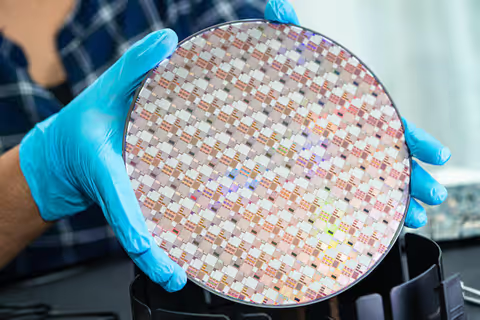
Nowhere is the pressure of tiny chip designs more obvious than in how often engineers turn to artificial intelligence. Suddenly, keeping track of microscopic layers depends less on manual checks. Instead, pattern recognition software handles shifts that used to stall production. Over time, even small errors push teams toward smarter automation. All at once, old methods feel too slow when scaling below ten nanometers.
Digital Twins and Simulations
Before building chips, engineers can test how they work using smart virtual copies. These computer-based versions catch errors early through simulation. Testing ahead saves time by preventing costly mistakes later on. Digital twins act like practice runs for complex circuits. With these tools, outcomes become more predictable during design. Mistakes shrink when problems show up in software first. Prototypes gain reliability because flaws reveal themselves earlier. Virtual testing paves the way for smoother production phases.
Increase in AI and Engineer Teamwork
Out of step with old systems, today's methods pair people skills alongside machine insights instead of going full auto. Machines handle the heavy lifting while humans guide judgment - teamwork shapes outcomes now. Not one without the other, but both working in rhythm where decisions gain depth. Where once speed ruled alone, balance takes lead through shared effort.
Data Quality Matters
Out of nowhere, wrong details mess up how well smart machines learn. When information lacks clarity, outcomes start drifting off track.
human oversight still matters
Even today, engineers help check outcomes before choices about designs are made. A human touch stays part of the process long after machines finish their work.
Computational Requirements
Heavy computer power often needed when teaching smart machines. Running these systems takes serious hardware muscle behind the scenes.
Continuous Updates
Fresh shifts in chip tech push AI to shift its stance. Design changes nudge how these systems evolve over time.
The Future Of Artificial Intelligence In Chip Design
Tomorrow’s computer chips might lean heavily on artificial smarts. When designs grow trickier, these systems could step in - not just handling clutter but quietly nudging progress forward.
Few changes could show up down the line
- More autonomous design workflows
- Faster optimization techniques
- Improved simulation accuracy
- Greater integration with manufacturing processes
- Enhanced collaboration between AI systems and engineering teams
Faster progress might streamline how quickly new designs move from idea to product, boosting speed and power in electronics used everywhere.
Conclusion
Now machines lend a hand in crafting tiny chips, handling tasks like streamlining processes, fine-tuning layouts, running checks, then studying results. When building smaller, smarter semiconductors gets tough, clever software steps in - making it easier for people who build them to move faster without mistakes.
Nowhere near taking over human roles, AI steps in beside engineers during chip creation. As progress rolls on in machine learning, neural networks, and automated layout tools, smart systems will stick around - shaping how chips evolve ahead.