Why Smaller Chips Are More Powerful: Understanding Modern Semiconductor Technology
Modern electronic devices have become faster, smarter, and more energy efficient over the years. One major reason behind this progress is the development of smaller semiconductor chips. From smartphones and laptops to artificial intelligence systems and electric vehicles, compact chips play an important role in improving performance.
Smaller chips pack a punch because they move data faster. Though tiny, these pieces do heavy lifting across gadgets we use daily. As producers shrink circuits, machines gain speed without growing bulk. Progress like this reshaped hospitals, phones, even how cars drive. Each leap forward fits more power into less space.
Smaller chips run faster, using less power while fitting into tighter spaces. Because of their size, these tiny parts help devices do more without growing bulkier. One reason they’ve become essential? Modern tech demands speed and efficiency at every level. As manufacturing improves, engineers pack more functions onto each sliver of silicon. What comes next depends on materials science pushing past old limits. Progress here shapes everything from phones to factories in quiet but powerful ways.
Understanding Semiconductor Chips?
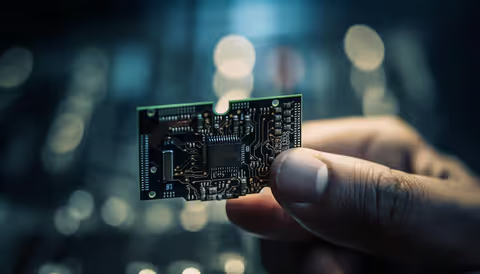
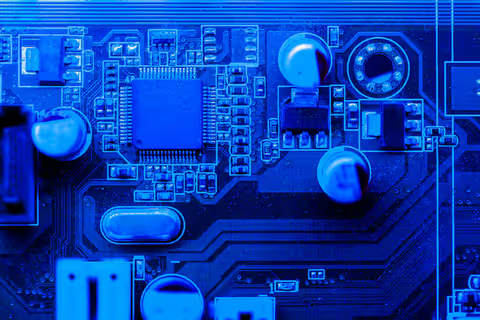
Little pieces of technology, built mostly from silicon, go by names like microchips or semiconductors. Inside each one, you’ll find countless transistors - sometimes more than a billion - that manage how electricity moves. Though small in size, they play a big role in how devices process information. Their design allows them to switch or amplify signals with great precision.
Inside electronics, transistors function as tiny gates handling information while running computations. A single device uses these microscopic controls to manage tasks through electrical signaling instead of mechanical parts.
Main Functions of Semiconductor Chips
- Processing information
- Storing data
- Managing electrical signals
- Supporting communication between hardware components
- Running software applications
Tiny chips mean makers can pack extra transistors into one spot, boosting how fast computers work. Though small, they handle tasks quicker because of this tighter layout. Performance jumps up since everything fits closer together. More power shows up in the same size device, just by shrinking parts. Efficiency grows when space gets used smarter like this. What changes is how much a chip does, not its look. Speed comes from density, not bigger designs.
Smaller Chips Can Do More
Smaller chips pack more power because they squeeze in extra transistors. Fitting more transistors means shrinking each one down first.
Increased Transistor Count
Tiny switches mean more parts fit on one tiny board. With extra switches, performance jumps up because space gets used better. Each piece added boosts what the chip can handle. Packed tight, they speed through tasks. Room for more means smarter results come quicker. Efficiency climbs when everything shrinks down. Power grows without taking up room. Clever layouts make it all run smoother. Limits push further each time they shrink them again
- Processing speed
- Multitasking capability
- Graphics performance
- Artificial intelligence processing
Faster Signal Transmission
Signals hop between parts faster when those pieces sit tight. Less distance means less waiting, so things move quicker.
Lower Power Consumption
Because transistors shrink, they tend to sip power instead of guzzling it. As a result, gadgets handle heavier workloads without draining juice fast, which means batteries last longer and things stay cooler during use.
Improved Efficiency
Small chips handle extra tasks each second without using more power. For phones and big computing hubs alike, that matters most when every watt counts.
Chip Size and Nanometers Explained
A single step in making chips uses measurements called nanometers. That unit means just a tiny part of a meter - specifically one out of a billion pieces.
Most everyday chips come in these sizes:
Tiny wires inside chips measure 14 nanometers across - this older design sips more power while moving slower. Half that size shows up at 7 nanometers, where tasks finish quicker using less energy. Squeezing down to 5 nanometers packs in more switches, boosting speed dramatically. Even tighter spacing appears at 3 nanometers, sharpening how fast artificial brains learn. Just beyond lies 2 nanometer tech, opening doors nobody has fully walked through yet.
A tiny step down in nanometers often means a leap forward in chip-making skill.
How Nanometer Scaling Works
As chip components shrink:
- More transistors fit into the chip
- Data processing becomes faster
- Energy loss decreases
- Fewer calories get burned when the body slows down heat generation
People often refer to this method as shrinking chips step by step.
Smaller chips use less power and fit more components
Better Device Performance
Tiny chips make phones, game consoles, computers react faster. A device runs quicker when its inner parts shrink. As size drops, performance climbs in handhelds and desktops alike. Little pieces inside push speed higher across gadgets people carry or sit before. Shrinking tech means snappier actions each time a user taps or clicks.
Enhanced Battery Life
Running on less power, tiny processors let gadgets work more hours between plug-ins.
Artificial Intelligence Support
Speed is key when today's artificial intelligence handles information. Tiny processors deliver strength for complex math behind smart software instead of bulky parts.
Reduced Heat Generation
Built well, these chips tend to run cooler, helping gadgets stay steady when pushed hard.
Compact Device Design
Fewer millimeters matter when building gadgets, so tiny circuits help drop bulk. Devices shrink nicely once components inside need just a sliver of room.
Smaller Chips Made Through Tiny Patterns And Layered Materials
Fine details matter most when building chips through intricate steps. Tiny changes can shift outcomes during fabrication’s careful dance. Machines shape each piece with steady, watchful repetition. Success hides in controlled environments where dust is a threat. Every layer adds complexity without room for misstep.
Silicon Wafer Production
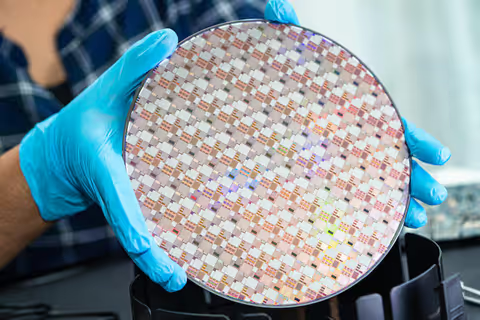
Fresh off the production line, silicon wafers go straight into chip-making at semiconductor firms. These smooth discs form the ground layer where circuits take shape. Starting small, each wafer holds countless tiny processors before being sliced apart. Built flat and shiny, they carry the guts of electronics from day one. Layer by layer, patterns etch onto their surface during complex treatments. Before long, what began as blank circles powers devices worldwide.
Photolithography
A beam of light draws miniature circuit designs on silicon, one step at a time. Patterns form where the light touches, guided by precise masks. Tiny details appear through controlled exposure, shaping electronic pathways slowly.
Etching and Layering
Fine layers go on first, once impurities are cleared out by makers. Tiny parts stack up after that, forming transistors step by step.
Testing and Packaging
Once made, chips get checked. Only then do they go inside gadgets.
A speck of dust might seem harmless, yet inside today’s chip plants it can wreck delicate circuitry. Cleanrooms go to great lengths - air filtered repeatedly, workers in full suits - to keep such risks away. Tiny flaws lead to failed chips, so every precaution matters. What looks like an empty hallway could be a controlled zone where silence and sterility rule. Even breath carries danger, which is why machines often handle tasks humans would disrupt.
Challenges of Making Smaller Chips
Smaller chips bring benefits, yet making them gets tougher. Still, production struggles grow alongside shrinking size.
Higher Production Complexity
Fabrication of advanced chips depends on exacting engineering, along with tools built for extreme precision.
Increased Manufacturing Costs
Funding high-tech chip plants means spending large amounts of money. Building these advanced factories takes serious financial commitment.
Heat Management Issues
Fitting extra transistors into tight spots makes cooling tougher when performance climbs. Heat builds faster than it can escape in compact designs pushing limits.
Physical Limitations
Smaller sizes challenge silicon transistors' stability - physics sets boundaries. Beyond a point, they falter under their own scale. Tiny dimensions risk erratic behavior, even failure. Reliability fades when miniaturization ignores physical constraints. Engineering hits walls nature won’t let it pass.
Recent Developments in Chip Technology
Years pass. Machines grow smarter, faster each day. Tiny parts inside them shift shape almost overnight. Progress hums without pause, steady beneath the surface.
Artificial Intelligence Chips
Computing chips built for artificial intelligence work faster on learning systems because they match how networks think. These processors manage data in ways regular ones cannot since their structure fits pattern recognition better.
3D Chip Stacking
Stacking parts upward lets makers build chips with better speed and smaller footprints. Instead of spreading out, they’re building up to save room while boosting power. Tiny layers pile on top of one another, helping devices run faster without taking extra space. This shift in design allows more function in tight areas by going vertical rather than flat.
Advanced 2nm Technology
Faster chips using less power - that's what a handful of tech firms now chasing 2nm design aim to deliver. Progress creeps ahead as engineers tackle tiny circuits needing extreme precision. Tiny steps forward happen when materials behave just right under intense scrutiny. Performance gains come not through leaps but steady tweaks across labs worldwide. Shrinking components lets each volt stretch farther than before seen in older models. New methods emerge slowly, shaped by trial, error, patience.
Chiplet Architecture
Some firms now stack tiny chips instead of crafting a single big one. These mini parts, known as chiplets, fit together like tiles. Each handles a unique job. Grouping them boosts efficiency without size. The approach shifts how processors are made. Tiny modules link to form a whole system. Performance grows through arrangement, not scale.
Sustainable Semiconductor Manufacturing
Finding ways to cut back on power seems key for companies building computer chips. Some factories now test cooler-running tools instead of old models. Energy-heavy steps in making tiny circuits draw fresh attention lately. Lower emissions matter just as much as efficiency gains here. Machines hum differently when set to eco-focused modes. Cleaner processes slowly replace familiar routines across facilities.
Smaller Chips and Everyday Tech
Inside today’s gadgets, tiny silicon pieces power most functions. These small parts work quietly behind the scenes.
Smartphones
Camera shots get sharper when the phone's brain works faster. Gaming feels smoother because the system keeps up without slowing down. Jumping between apps happens quicker than before thanks to smarter chip design.
Laptops and Computers
Faster performance comes from tiny chips, while power use drops at the same time.
Electric Vehicles
Fitted deep inside today’s cars, tiny silicon pieces handle how power flows through storage units. Navigation relies on these same components to map routes accurately. Safety tools depend on them just as much, watching conditions without pause.
Healthcare Equipment
Inside medical gear, tiny chips handle pictures, keep track of health signs, meanwhile they sort through information. While small, these parts work hard - seeing details up close, checking body signals now and then, also handling numbers behind the scenes.
Smart Home Devices
Home systems that link together need small smart parts to run tasks without wires. These tiny brains make devices talk while using very little power.
Smaller Chips Often Misunderstood
Smaller Chips Don't Guarantee Faster Performance
How well it runs ties closely to how the code is tuned, whether heat gets managed properly, one piece of hardware fits with another. A smooth experience often comes down to smart programming, airflow that works when needed, parts built to work together without friction.
Nanometer Labels Differ In Meaning
One maker’s idea of a chip size might not match another’s. How names are chosen can depend on who builds them. Standards shift between companies without warning. Naming tricks often hide behind familiar terms. Each brand sets its own rules silently.
Smaller Chips Still Make Heat
Even when things run smoother, powerful chips might get quite hot while handling tough jobs.
Smaller Chips Keep Getting Built
One step ahead could be materials unlike silicon shaping what chips are made of. New ways to build them might replace old techniques slowly over time. Different approaches in production may take center stage instead.
Researchers are exploring:
- Quantum computing technologies
- Carbon nanotube transistors
- Advanced AI accelerators
- Optical computing systems
- Improved energy-efficient architectures
Out of today’s labs might come tomorrow’s machines. A shift in how code meets hardware begins quietly. Not every change shouts - some slip in through backdoors of routine updates. What runs silently now may define what comes later. Tomorrow's logic hides in plain sight.
Conclusion
Tiny computer chips pack a stronger punch since extra transistors squeeze into tight areas, boosting how fast they run, saving power, and working better. Because of these leaps, today’s gadgets like phones that think, medical tools, smart software, and battery-powered cars can do what they do.
One step forward in chip making often means a few steps back when heat builds up too fast. Tiny circuits pack more power, yet squeeze against nature’s limits harder each time. Still, shrinking parts demand clever fixes where old tricks fail silently. Efficiency climbs only if engineers outsmart the rules they can’t change.
Peering inside tiny chips reveals why today’s gadgets and computers evolve so fast. Though small, their design shapes what devices can do next.