How Semiconductors Are Used in Smartphones: A Complete Beginner-Friendly Guide
Semiconductors are the backbone of modern smartphones. Every time you make a call, open an app, or take a photo, semiconductor components are working behind the scenes. These tiny materials control how electricity flows inside your device, enabling it to perform complex tasks efficiently.
Most folks don’t think about what powers their phone, yet tiny materials called semiconductors make modern features possible. Since these components shape speed, intelligence, and battery life, knowing how they work gives clearer insight into device progress. Instead of complex jargon, this explanation uses everyday ideas so comprehension feels natural. Through straightforward language, even someone new to tech can grasp the basics without confusion.
Basics of Semiconductors Overview
Found in everything from phones to solar panels, silicon sits neatly where metals fade into non-conductive stuff. Not quite a wire, not quite a blockage - this middle-ground behavior defines what a semiconductor does.
Key Characteristics:
- Can control electrical current
- Highly efficient for small electronic circuits
- Once helped create chips that work as complete circuits
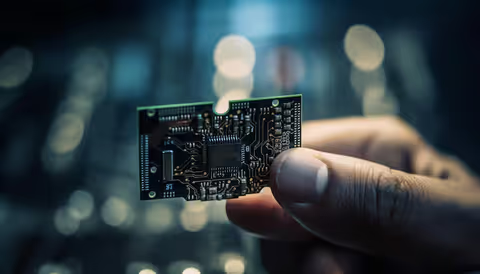
Inside phones, tiny chips made from semiconductor materials run nearly all operations. These pieces handle tasks through microscopic circuits built right into them.
Semiconductors Enable Smartphone Functionality
These tiny chips power how phones work, shaping both speed and features. Flip one out, and today’s handsets simply couldn’t operate as they do.
Why They Matter:
- Processing Power: Enables fast computing and multitasking
- Running less power means the battery lasts longer
- Wireless links happen through Wi-Fi, with Bluetooth also built in. On top of that, 5G keeps things moving fast. Signals stay strong across different networks. Each type works without cables holding them back
- Miniaturization: Allows compact and lightweight designs
Smartphones rely on semiconductors because they handle so much of the work inside. A single device needs these tiny parts to run apps, send messages, and connect online. Without them, modern phones simply would not function as they do today.
Smartphone Semiconductor Parts
Inside every smartphone, tiny chips handle different jobs. These pieces work one after another, built using materials that control electricity. Each part has its own role. One manages power while another deals with signals. They fit together without needing extra links between them.
1. Processor (CPU)
Inside every smartphone, the central processing unit takes charge like a conductor. This chip follows commands while keeping apps moving. Not quite muscle, not quite mind - yet it pushes tasks forward steadily.
2. Graphics Processing Unit
Handles graphics rendering for games, videos, and user interfaces.
3. Memory Chips
- RAM: Temporary storage for running apps
- Files live here, along with apps and what the system needs. Flash memory holds it all, keeping things ready when needed. Not everything runs at once, yet each piece stays put until called upon
4. Modem Chip
Connects to cell networks, working with both 4G and also newer 5G systems. Signal reach stays strong across different service types.
5. Power Management Chip
Power draw gets managed along with how long the battery lasts.
6. Image Signal Processor
From the camera comes raw visuals, then reshaped for clarity. A fresh look emerges after each frame passes through adjustments. Quality grows when details are pulled forward quietly. Each picture moves beyond its original form slowly. Sharpness appears where blur once lived without question.
Smartphone semiconductors explained simply
Inside semiconductors, circuits pack countless miniature switches working together. Tiny gates crowd these chips, teaming up to manage electrical flow. Built from immense numbers of small components, they guide current precisely where needed. Millions upon millions of little elements link across each wafer-thin surface. These minute parts operate as one hidden network inside modern electronics.
Basic Working Process:
- Into the chip flow electrical signals
- Current moves when transistors switch it on or off. A tiny signal decides whether electricity passes through. They turn circuits active by allowing electrons to travel. Switching happens fast, managing power in devices. Electrical pathways open only if the transistor permits
- Signals are processed into meaningful instructions
- Signals move toward screens, sound systems, or similar parts
Example:
When you open an app:
- The processor retrieves data from memory
- Transistors process instructions
- The GPU renders visuals
- Result appears on screen
This entire process happens in milliseconds.
Smartphone Chips Handle Power Processing and Connectivity
What handles your apps and system tasks? That job belongs to the part moving data around. When making calls or going online, a different piece takes charge of sending signals. Battery life gets shaped by how well energy flow is kept under control. Photos look sharper because something adjusts colors and details quietly. Messages, files, photos - they stay put thanks to background handling of space. Talking or browsing works smoothly since connections are guided without pause.
recent trends and updates
Now chips inside phones are changing fast. Lately, progress has aimed at speed gains while using less power.
1. Smaller Chips Made with Nanometer Tech
Inside today’s processors, parts pack tighter thanks to 3nm or 5nm tech. Shrinking them down means faster performance while sipping less energy.
2. Integrating Artificial Intelligence
Smartphones Now Include Chips That Use Artificial Intelligence
- Voice recognition
- Image enhancement
- Smart assistants
3. 5G Connectivity
Speeds get quicker when new silicon parts move information with less delay. Communication improves because tiny tech inside handles tasks more smoothly. Less waiting happens during transfers thanks to smarter chip designs.
4. Energy Efficiency Improvements
Fewer hot spots show up with fresh styling, while power lasts longer because of smarter parts inside.
5. System-on-Chip (SoC) Design
Packed together on one piece of silicon, the CPU, GPU, and modem work as a team - speed goes up while room it takes shrinks. What fits tighter runs quicker.
common mistakes and things to consider
Even though they work well, semiconductors come with certain aspects worth noting.
1. Overheating Issues
Fans spinning fast might mean the chip's working too hard. When heat builds, speed drops. A warm machine often runs slower than it should.
2. Battery Drain
Battery drains quicker when chips work poorly.
3. Compatibility Challenges
Some chips miss certain features or can’t handle specific networks.
4. Manufacturing Complexity
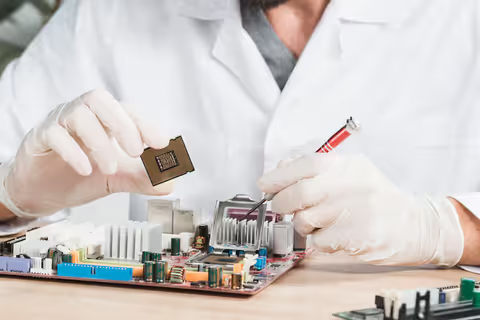
Fabricating semiconductor chips demands high-level tools along with exactness. Precision matters because tiny errors can disrupt function across millions of components packed tightly together.
5. Performance and Efficiency Together
A chip that runs faster can draw extra energy when fine-tuning falls short.
Conclusion
Tiny chips run every part of your phone. Because of them, calling works just as well as smart software or sharp pictures. When electricity moves through small circuits, speed and performance improve naturally. Without such control, today’s phones could not manage heavy jobs easily.
Smartphones might get smarter because chips keep changing how they work. When new tech shows up, tiny parts inside phones help save power while speeding things up. These shifts happen quietly but affect every tap or swipe later on.