Why Semiconductors Matter in Modern Life: A Simple and Informative Guide
Semiconductors are small but essential components that power most of the devices used in daily life. From smartphones and laptops to cars and medical equipment, semiconductors play a key role in making modern technology possible.
Picture your phone, then shift to a laptop, maybe those traffic lights around the corner - each runs on small chips you never see. These parts manage electric flow; without them, devices lose their function entirely. Inside one gadget, countless switches snap open and shut in moments too short to notice. Data travels as charged particles follow paths thinner than hair. Memory updates quickly when signals switch positions instantly. Across oceans, messages travel through tiny parts made of sand-like materials. Picture everything digital going blank - silence on every display. That emptiness shows how much we lean on these quiet builders behind the scenes.
Overview of Semiconductors
A material that doesn’t fully block electricity, yet doesn’t let it flow freely either - that’s the core of a semiconductor. Instead of moving at will, electrons pass when specific triggers are met.
Common Semiconductor Materials
- Silicon (most widely used)
- Germanium
- Gallium arsenide
Key Characteristics
- When conditions click into place, people could notice it moving charge
- Performance might get a boost if changes are made
- Hidden inside nearly every gadget, these small parts form what gives life to digital brains
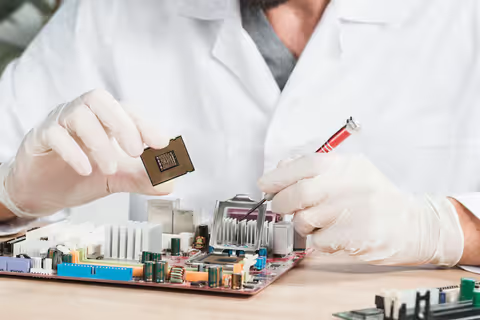
Hidden deep within electronic devices, small chips manage operations - crafted from substances that guide electrical flow. Not loud, yet essential, these components make smart decisions inside machines. Quietly doing their job, they power daily tech without drawing attention.
Semiconductors In Everyday Use
Deep inside your phone, a tiny slab hums without pause. It runs because of stuff that bends electricity like clay. Most people never notice these chips hiding in plain sight. Every gadget leans on them, yet few ask what makes screens light up. Hidden beneath plastic shells, silent workers shape how things move, think, react.
1. Powering Everyday Devices
- Smartphones and tablets
- Laptops and desktops
- Smart home devices
Inside every device that runs smoothly hides a small piece built from unique stuff. These little parts shape how fast things move when you press start.
2. Supporting Communication Systems
Semiconductors are used in:
- Mobile networks
- Internet infrastructure
- Satellite communication
Faster movement of data happens by cutting out slowdowns. When transferring details, steady results bring trust.
3. Advancing Healthcare Technology
Medical devices use semiconductors for:
- Pictures of insides come from machines - MRI units work slowly, using magnets; CT devices flash X-rays fast. Each tool shows details differently, depending on what hides where
- Monitoring equipment
- Diagnostic tools
Smarter tools bring quicker outcomes inside clinics. When processes think ahead, performance climbs without extra effort.
4. Enabling Transportation Systems
Modern vehicles depend on semiconductors for:
- Engine control systems
- Navigation systems
- Crash cushions tucked in dashboards. Warnings that ping when something shifts too close. Tiny computers watching every turn of the wheel
5. Driving Digital Transformation
Semiconductors support technologies such as:
- Artificial intelligence (AI)
- Cloud computing
- Internet of Things (IoT)
Fresh gears shape how shops run by noon. Quiet shifts in metal hands remake tasks from one end of the land to another.
Types of Semiconductors
Out of things like silicon or germanium comes the way parts act. Their behavior? Shaped entirely by material makeup.
1. Intrinsic Semiconductors
- Pure form of semiconductor material
- Limited conductivity
2. Extrinsic Semiconductors
- Some tiny bits slipped in help power move faster through. Tiny extras mixed here make electric flow smoother across. A few specks stirred in push current along more easily now. Little doses tucked inside let energy travel quicker throughout
- Two main types:
- N-type: Extra electrons
- P-type material has additional holes that carry a positive charge
3. Integrated Circuits (ICs)
- One piece holds several parts together now. Built this way, it fits more inside without growing bigger. Stuff works closer, so it runs better. Putting things together like this saves space where it matters most
- Inside most gadgets you handle daily. Where wires twist and chips hum. Lives in devices that flash or chirp. Appears near silent currents moving through plastic shells
How Semiconductors Work
Electrons inside some materials follow paths people can guide. Thanks to this steering, such stuff acts as switches or amplifiers in electronic devices.
Basic Working Principle
- Electrical current flows through the semiconductor
- Doping creates regions with different charge properties
- These regions control current flow
Simple Process Flow
- Input signal enters the circuit
- Semiconductor regulates the flow of electricity
- Output signal is generated
Numbers get crunched, that is why computers handle tasks. Memory inside keeps data safe until needed. Once directions are understood, work begins without delay.
Where semiconductors are used
Most days start with a screen glow, phones pulling attention before breakfast. Cars now ride smoother thanks to hidden parts that adjust as wheels turn. What used to take weeks in hospitals happens faster - machines show bones and tissue clearly. When workers leave, factories stay busy because certain gear runs through the night. Messages jump across distances using thin lines buried underground or flashing through air.
new changes in semiconductors
Fresh changes tweak chip-making through shifting technology. As progress marches on, smarter approaches show up every so often. Out of nowhere, better techniques start replacing old ones.
1. Smaller and Faster Chips
Smaller chips run quicker, since manufacturers squeeze extra muscle into tight spaces. Even miniaturized, they manage jobs more smoothly now that design upgrades increase their capability.
2. Artificial Intelligence Integration
Out of nowhere, specialized processors made only for artificial intelligence start shifting data at higher speeds. Because of this, the latest models cut through jobs much faster than before.
3. Energy Efficiency Improvements
Out of clever thinking, better speed appears when machines drink less power. Little by little, changes emerge through lighter Earth impacts alongside extended charge times.
4. More 5G networks being built
Signals move quick, stay smooth in 5G because small chips handle the flow. Built right into gadgets, these parts form the base for today’s wireless connections. When they’re missing, performance falls fast.
5. Growth of IoT Devices
Faster chips are needed as more devices start chatting between themselves. With data zipping around at higher speeds, little gizmos have to think on their feet just to stay even.
Common Considerations and Challenges
Despite being all around us, chips carry some quirks that deserve attention
1. Supply Chain Challenges
These days, some industries feel the squeeze as global demand for chips grows. Where supply falls short, gaps start to show. With more hands reaching for the same tech, empty spaces appear in the chain.
2. Manufacturing Complexity
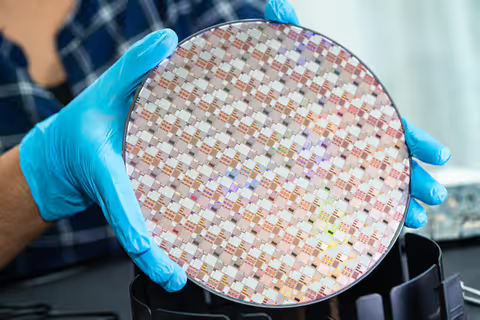
Built in clean rooms, computer chips emerge through processes that leave no room for error. Step after precise step, microscopic pathways form where even specks of dust can ruin everything. From silicon wafers to functional units, each phase moves without hurry yet never stops.
3. Heat Management
Spinning at high speed, fans respond as small circuits drive intense energy flow. A slight delay in cooling causes temperatures to rise without warning.
4. Environmental Impact
Factories run on fuel and raw stuff, yet keeping things eco-friendly still weighs heavy in thought.
Conclusion
Deep in the background, life hums along because of small tech parts most never see. Far beyond screens and keyboards, they send pulses guiding data across distances. When a doctor checks an image, it is one of those quiet chips making detail clear. Vehicles adjust course smoothly thanks to split-second decisions from built-in circuits. Step by step, hidden components allow complex tasks to unfold without stopping.
Hidden inside gadgets, chips run the background of ordinary moments. Step by step, new advances tie deeper into these tiny parts. Watch one function, then another follows - revealing patterns behind machine behavior. Slow shifts build without noise. Most overlook them completely.