Guide to Future of Nanoelectronics: Trends, Technologies, and What to Expect
Nanoelectronics is a field of technology that focuses on building electronic components at an extremely small scale, typically at the nanometer level (one billionth of a meter). As traditional electronics approach physical limits, nanoelectronics is becoming increasingly important for developing faster, smaller, and more efficient devices.
Tiny tech shapes what comes next in machines that think, health tools, power solutions, yet also how we stay connected. Its impact shows up in learning software, gadgets you wear, cities built smarter. Seeing how it works makes clear why everyday electronics keep changing form.
Overview of Nanoelectronics
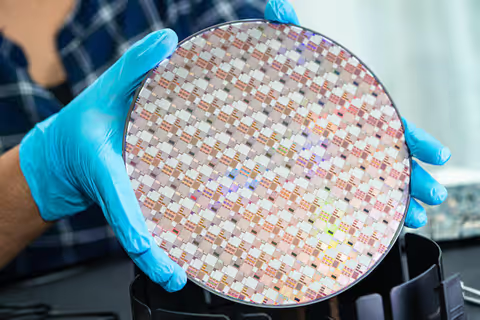
Down at the tiny scale, nanoelectronics applies nano-sized tech to electronics. Though small, these parts work just like bigger ones - only shrunk way down. Tiny circuits get built using methods that shape materials atom by atom. Devices come together with details finer than a hundredth of a micrometer. Each piece must fit precisely, since errors grow obvious fast. Shrinking components allows more power in less space. Parts operate faster when distances between them drop short. Engineers push limits further each year, nudging toward even tinier builds.
Key Characteristics
- Extremely small size
- High performance and speed
- Reduced power consumption
- Enhanced functionality
Basic Components
- Transistors at nanoscale
- Quantum dots
- Nanowires
- From carbon come substances such as graphene
Compact electronics come alive when engineers swap old methods for these parts. Efficiency jumps because they ditch outdated chip rules. Small size? That shows up thanks to smarter design moves. Limits fade once standard semiconductors get replaced.
Importance of Nanoelectronics
Out here, tiny tech keeps today's gadgets moving forward. When speed matters most, new methods step in where old ones fall short.
Key Benefits
- Miniaturization: Enables smaller devices such as smartphones and wearables
- Energy Efficiency: Reduces power consumption in electronic systems
- High-Speed Processing: Improves computing performance
- From health trackers to clever gadgets, it works behind the scenes. Built for modern tools that monitor your body. Fits into daily tech without slowing things down. Runs quietly inside devices you use every day. Helps machines sense changes and respond fast. Not just for now - ready for what comes next
Impact Areas
- Healthcare (nano sensors and diagnostics)
- Communication systems
- Consumer electronics
- Environmental monitoring
types and key aspects of nanoelectronics
Few materials shape nanoelectronics, each bringing distinct traits forward. Some techs build on others, yet move ahead alone too.
1. Molecular Electronics
Tiny pieces handle jobs inside electronics. The goal? Swap out old-school silicon parts.
2. Quantum Electronics
Because of quantum effects, electrons act in specific ways when things get really small. How tiny structures behave ties directly to physics rules that govern particles. At very short distances, normal electronics change how they work entirely.
3. Spintronics
Spinning electrons, not their charge, handle information now - making things faster. Efficiency jumps when the tiny particles twist through tasks. Data moves on a wobble, not a flow. Speed climbs because motion replaces push. Storage shifts from pull to whirl. Quick steps come from rotation, never stillness. Movement defines memory in this setup. Information rides spin, skips old limits.
4. Carbon-Based Nanoelectronics
Flexibility joins strong conduction in substances such as graphene and carbon nanotubes. Though lightweight, they bend without breaking while moving electrons well. Their structure allows flow even when twisted or stretched. What stands out is how thin layers still perform under pressure. Performance stays high despite sharp folds or repeated motion.
How Nanoelectronics Works
At tiny scales, nanoelectronics shapes matter atom by atom. Because of that, it tunes how electricity moves with extreme accuracy.
Basic Working Process
- Material Selection: Choosing nanoscale materials like graphene
- Fabrication: Using advanced techniques such as lithography
- Integration: Combining components into circuits
- Testing: Ensuring performance and reliability
Simplified Comparison Table
Traditional Electronics Versus Nanoelectronics In Size Power Speed Efficiency And Scalability
Future of Nanoelectronics 2025 onward
What comes next in tiny electronics depends on what scientists keep uncovering. Progress hides inside new lab results, not old promises.
1. Advanced Semiconductor Scaling
Fine-tuning the tiny switches keeps going, pushing past today's barriers to get quicker results.
2. AI Meets Tiny Electronics
Built on tiny circuits, nanoelectronics speeds up how AI handles tasks. When components shrink, learning machines respond quicker than before.
3. Flexible and Wearable Electronics
Development of bendable and lightweight devices for healthcare and fitness tracking.
4. Neuromorphic Computing
Brains inspire chip layouts to handle information more smoothly. Working like thought patterns, these circuits sort data without extra effort. Some systems learn on their own, shaped by how neurons connect. Signals move through paths built to adapt midflow. Efficiency grows when structure follows thinking itself.
5. Energy-Efficient Devices
Start by cutting power needs in servers and mobile gadgets. A shift toward efficiency begins where electricity flows heaviest. Machines that run cooler often last longer too. What runs lean today shapes tomorrow's tech limits. Small changes inside chips add up across continents.
6. Quantum Computing Support
Small-scale electronics help create steady quantum setups meant for next-gen computation.
common mistakes and things to consider
Though tiny tech brings benefits, some hurdles pop up along the way. Not everything works smoothly just because it's small.
1. Manufacturing Complexity
Fine work at tiny scales begins with tools that handle detail sharply. Methods must match the small world they shape.
2. High Development Costs
Spending on research often climbs because machines cost a lot. Equipment needs boost budgets fast.
3. Material Limitations
Faulty behavior can emerge when certain substances shrink to near-atomic sizes.
4. Heat Management Issues
Heat comes from tiny parts, so attention is key when managing it.
5. Reliability Concerns
Faults creeping into tiny gadgets over time remain a puzzle scientists keep tackling.
Conclusion
Smaller gadgets grow quicker because tiny circuits pack a powerful punch these days. Healthcare tools evolve just as fast as smart machines learn new tricks. What once seemed far off now shows up in labs turning ideas into real things.
One step at a time, progress in science pushes nanoelectronics closer to solving today’s toughest tech challenges. Because of what we’re learning, new paths open - shaping tools that fit tomorrow’s demands. With each discovery, the core ideas reveal shifts already underway in how devices function and connect.