Guide to Role of Semiconductors in AI: Powering Modern Artificial Intelligence Systems
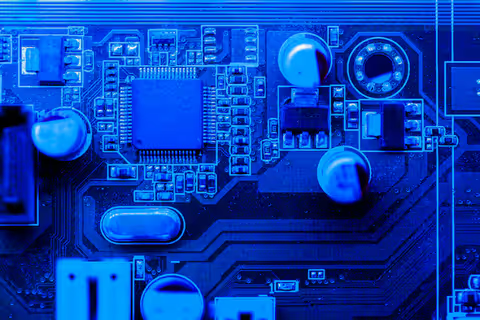
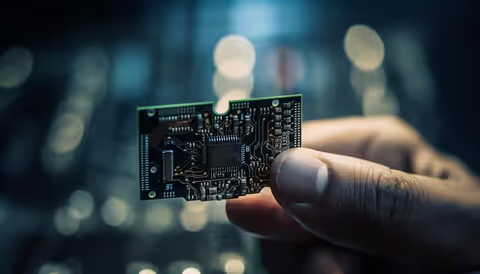
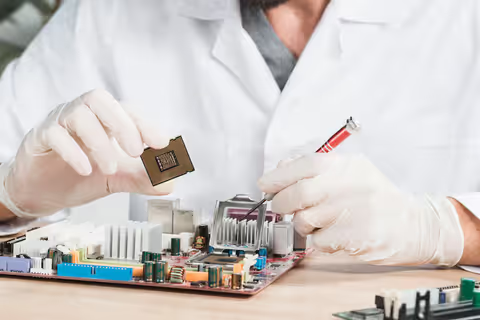
Artificial Intelligence (AI) is transforming industries such as healthcare, finance, and transportation. Behind this rapid progress lies a critical technology: semiconductors. The role of semiconductors in AI is fundamental because they act as the building blocks of computing systems that process large amounts of data.
Out here, where phones meet massive server rooms, tiny chips let devices think, sort facts, or choose paths. Peek behind the curtain and you see why artificial minds run smoothly, shifting forward over time.
Basics Overview
What Are Semiconductors?
Not far from glass but closer to metal in how they carry current - materials like these power most of today's gadgets. Silicon shows up almost everywhere, a key player tucked inside phones, computers, even cars.
Components get built using them, such as:
- Microprocessors
- Memory chips
- Graphics Processing Units
- Integrated circuits
AI Processing Explained Simply?
Speedy number crunching, sorting through mountains of data, yet following complex rules defines what machines do when thinking. Such heavy lifting leans on strong parts built small, chips making it possible somehow.
Importance or Benefits
The role of semiconductors in AI is crucial for several reasons:
1. High-Speed Computation
Running at top speed, AI models chew through billions of calculations every single second. Chips built on semiconductor tech make that pace possible by handling tasks without dragging behind.
2. Energy Efficiency
Fueled by hefty electricity demands, today's artificial intelligence runs hot. Yet smarter chip layouts manage to trim wattage without slowing down speed.
3. Scalability
Running on tiny chips, semiconductors help AI grow beyond handheld gadgets into vast data centers. Though unseen, these materials form the backbone when machines learn at massive levels.
4. Real-Time Processing
When voice helpers talk back, they need instant replies - chips make that speed possible. Machines that move without drivers rely on quick decisions happening right away, thanks to tiny electronic brains inside them.
Types Features Key Aspects
AI Semiconductor Building Blocks
Different semiconductor components play specific roles in AI systems:
1. Central Processing Units
- Handle general computing tasks
- Manage system operations
2. Graphics Processing Units
- Designed for parallel processing
- Perfect when teaching machines to learn
3. Tensor Processing Units
- Specialized for AI workloads
- Fine-tuned to handle machine learning jobs
4. Neural Processing Units
- Engineered from the ground up to handle neural networks
- Fitted inside phones, also found in gadgets at the network's outer edges
AI Chip Types Compared
CPU Handles general tasks System management. GPU Manages parallel work AI models. TPU Optimized for AI Deep neural networks. NPU Accelerates neural operations Edge devices.
How It Works Process
Semiconductors Enable AI Processing Through Tiny Electronic Components
- Data Input
- From pictures to sound clips, machines learn using what they’re given. Text shows up just as often as visuals do in their training. Sometimes it is speech that feeds these models instead.
- Processing via Chips
- These tiny circuits sort information by following step-by-step rules.
- Model Training
- Chips like GPUs or TPUs handle tough math when teaching artificial brains. These processors crunch numbers in layers, pushing learning forward through repetition. Speed matters because training takes endless loops to sharpen accuracy. Without them, models would crawl instead of learn fast.
- Inference Stage
- Some chips guess outcomes using fixed patterns they learned before. Others run those same blueprints but handle tasks differently under the hood.
- Output Generation
- Outcomes show up - maybe advice, maybe choices. A suggestion appears here, a conclusion lands there. Sometimes it's guidance, other times just a call made clear.
Parallel Processing
Computers built the old way do one thing after another. But with AI, tasks split up, running together instead of waiting - faster that way because nothing sits idle.
Current Shifts and New Developments
The role of semiconductors in AI continues to evolve with new developments:
1. AI-Specific Chip Design
Out of nowhere, firms began crafting processors tailored to artificial intelligence tasks. Efficiency creeps up when hardware focuses solely on these demands. Latency dips because the tech skips unnecessary steps. Suddenly, speed gains emerge from specialized circuitry.
2. Edge AI Growth
Faster chips now live inside phones instead of faraway servers. These tiny parts must sip power while staying sharp.
3. Advanced Manufacturing Nodes
Tiny chip parts - think 5 nanometers or smaller - boost speed while using less power. These sizes let circuits run quicker without draining energy fast. As chips shrink, they handle tasks better and waste less juice. Miniaturization pushes what devices can do, making them snappier yet calm on battery life. Efficiency climbs when components pack tighter in tight spaces.
4. AI in daily devices
Out there, past the glow of screens, tiny chips power how voice tools learn your habits. Wearables hum along thanks to hidden silicon that shapes quick decisions on the go.
5. Increase in Need for Data Center Chips
Running big AI systems means cloud services depend on chip-based equipment. Chips power the machines behind online computation tasks. Behind every smart algorithm sits physical circuitry doing the math. Hardware made of semiconductors handles heavy digital lifting. These tiny electronic components enable fast data processing across networks.
common mistakes and things to consider
When understanding or working with AI and semiconductors, some common points should be considered:
1. All Chips Look Alike
Some artificial intelligence jobs need one kind of computer chip; others run better on a completely different type.
2. Ignoring Power Consumption
Some machines powered by artificial intelligence use a lot of electricity. Better chip layouts help reduce that demand.
3. Overlooking Scalability
Tomorrow’s machines need to handle heavier thinking tasks later on. Growing smarts inside computers means today’s gear can’t slow down tomorrow’s pace.
4. Challenges in Building AI Machines
Fine wires weave through smart boxes, linking pieces just right. Some parts talk fast when they fit together well.
5. Cost Versus Performance Balance
Some faster chips need extra power, yet finding equilibrium matters. Though speed increases, demands grow too - keeping things even stays key.
Conclusion
Inside every smart machine, semiconductors quietly power progress. Because of them, devices sort through information fast - spotting trends without slowing down. Their work happens in silence, yet it shapes how systems respond, adapt, grow.
Chips power everything artificial intelligence runs on - whether regular processors, graphics units, or custom designs built just for machine learning tasks. With smarter machines becoming more common, progress in chip design quietly drives what comes next. Though unseen, these tiny components set limits, open possibilities, influence how fast things move forward.