How Semiconductors Power Smart Devices: A Simple Guide for Everyday Technology
Smart devices are part of everyday life, from smartphones and laptops to smart home systems and wearable technology. Behind the smooth performance of these devices lies a crucial component: semiconductors.
What makes your phone think? Tiny parts inside manage electricity so gadgets can run programs, save files, or respond fast. A look at their role shows why today's tools function the way they do - clear explanations cover core ideas, relevance, operation, plus what’s new lately.
What Are Semiconductors?
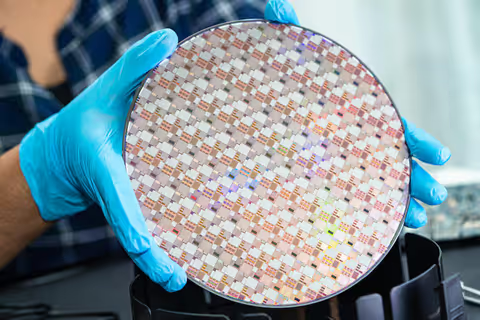
Between copper and rubber sits a middle ground - semiconductors fill that space. Silicon happens to be the one picked most often. Their ability to carry electricity isn’t full on, not fully off either.
Key Characteristics
- Can control electrical flow
- Sensitive to temperature and light
- Back when tech was getting started, materials were picked carefully to form parts such as transistors alongside diodes. These pieces helped circuits switch or control current flow inside devices found everywhere today. Often hidden, they sit quietly doing their job without drawing attention
common examples in devices
- Microprocessors
- Memory chips
- Sensors
- Integrated circuits (ICs)
Smart devices work because of these parts working together behind the scenes. Built into each gadget, they handle tasks without constant human help. What makes them tick is how they sense, decide, then act on their own. Inside every unit, tiny systems process information like a quiet mind at work. Found in everyday gadgets, their role stays hidden but essential.
Smart Devices Rely on Tiny Chips
Inside every speedy gadget hides a tiny helper shaping how things shrink while doing more. Efficiency climbs when these small parts take charge of moving information quickly.
Why They Matter
- Computing happens because these parts handle tasks inside gadgets. Running apps comes down to how they manage data work behind scenes.
- Some gadgets link up using Wi-Fi, others grab a signal via Bluetooth or hop on cellular bands. Connection options shift depending on what the device can handle. A few rely only on one method, while many mix ways to stay online. Network type often depends on range, power, and where you are.
- Start saving power by fine-tuning how energy flows. This small shift keeps batteries running longer before needing a charge.
- Switch on automation: found in sensors, also part of AI setups that react without human help.
Smart gadgets today wouldn’t look like they do without tiny chips making them work behind the scenes.
Smart Device Semiconductor Parts
Different semiconductor components perform specific functions within a device.
1. Microprocessors (CPUs)
- Think like the mind inside the machine
- Execute instructions and manage operations
2. Memory Chips
- Store data temporarily (RAM) or permanently (ROM, flash storage)
3. Sensors
- Detect physical changes like motion, light, and temperature
- Frequent inside smartwatches, found also in phones, turning up often among household gadgets
4. Power Management Chips
- Control power distribution
- Improve battery efficiency
5. Communication Chips
- Enable wireless communication
- Wi-Fi runs on it, also GPS finds its way through. Bluetooth connects devices at the same time
Key Semiconductor Parts and What They Do
Microprocessor Runs device operations. Memory Chip Holds app data and files. Sensor Captures motion and light. Power Management IC Regulates battery flow. Communication Chip Sends and receives signals.
Smart Devices Run on Semiconductors
Start with silicon, shaped into tiny chips that handle electrical signals. These pieces sit inside gadgets, guiding currents where needed. Instead of blocking everything like insulators, they let some flow through - just enough to switch tasks on or off. Tiny switches build up logic, forming patterns that run programs. Without them, modern tech would stop working altogether.
Input Detected
Sensors collect data from the environment:
- Touch input
- Motion detection
- Voice commands
Signal Processing Step Two
- The microprocessor receives signals
- Converts them into digital instructions
- Performs calculations and decision-making
Store collected information
- Temporary data stored in RAM
- Permanent data stored in flash memory
Execute the output
- Display shows results
- Speakers produce sound
- Motors or systems respond accordingly
Power Regulation Step Five
- Power chips ensure efficient energy use
- Prevent overheating and energy waste
From start to finish, the system keeps gadgets reacting fast, yet precise. Devices move together because timing stays tight across every step.
semiconductor technology features
Smart gadgets rely on semiconductors to power many of their high-end functions.
Miniaturization
- Allows smaller and lighter devices
- More components fit into compact spaces
Speed and Performance
- Faster data processing
- Smooth multitasking
Energy Efficiency
- Lower power consumption
- Longer battery life
Reliability
- Stable performance over time
- Mistakes fade when planning leads. A clear blueprint keeps things steady. Thoughtful structure means fewer surprises. Getting it right starts long before building begins
new developments in semiconductor tech
Faster chips emerge as needs grow. Though tiny parts change often, performance keeps rising. Because demands shift, designs adapt quickly. Even small updates make big differences over time.
1. Smaller Chip Sizes
- Advanced manufacturing techniques create smaller transistors
- Improves speed and reduces power usage
2. Artificial Intelligence Integration
- Some chips are built just for handling artificial intelligence jobs
- Used in voice assistants, cameras, and automation
3. internet of things
- Specialized chips for connected devices
- Inside living rooms, also popping up in factory setups. Equipment talks to phones, while machines keep factories running smooth
4. Energy-Efficient Designs
- Focus on reducing power consumption
- Important for mobile and wearable devices
5. Advanced Materials
- Research into alternatives beyond silicon
- Aims to improve performance and durability
common mistakes and things to consider
Grasping how semiconductors work means seeing past myths while paying attention to real-world details. Yet clarity often comes only after untangling confused ideas people tend to repeat without checking.
Common Misunderstandings
- “Faster chips always mean better devices”
- How well it runs ties closely to how the code is shaped along with the setup of the machine.
- “All chips are the same”
- Different chips serve different purposes.
Practical Considerations
- Heat management is important for performance
- Power efficiency affects battery life
- Compatibility between components matters
Design Challenges
- Balancing performance and energy use
- Managing heat in compact devices
- Ensuring long-term reliability
Conclusion
Inside every gadget we use daily hides a tiny helper - semiconductors. These bits manage how power flows, making phones think and computers remember. Without them, your tablet would sit still, unable to connect or respond. When electricity gets directed just right, clever actions happen fast.
When tech moves forward, semiconductors shift too - fueling things such as AI or connected gadgets. Because they run smart tools, seeing their role reveals what's under the surface of daily electronics.