Chip-Level Security Technologies Explained: Understanding Hardware Protection in Modern Electronics
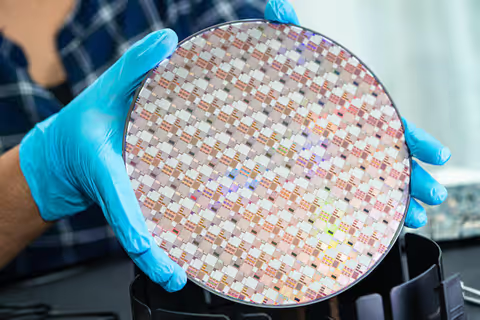
Chip-level security technologies are hardware-based security features built directly into semiconductor chips. These technologies help protect devices, applications, and sensitive information from unauthorized access, tampering, and cyber threats.
When devices link together online, staying safe matters more than ever - phones, factory machines, internet lines, and remote servers all face risks. Even though code defenses count, shields built into physical chips add tough barriers hackers struggle to crack.
Starting off, this piece covers what chip-level security is about. It walks through the way these protections actually function. Benefits show up when systems resist attacks better. Instead of just listing methods, it looks at typical strategies used today. Moving on, newer advances reveal shifts in how chips defend themselves. The whole thing stays grounded in real tech behavior. Not every detail gets expanded. Focus lands where changes matter most.
Chip Level Security Explained Simply
Security features built right into computer chips - like CPUs, microcontrollers, memory units, or full SoCs - make up what we call chip-level protection. These safeguards live inside the hardware itself, working at the most basic level of electronic devices.
Deep inside the machine, these defenses work where code can’t reach. Built into the metal bones, they create safe zones that guard private data during use or rest.
Examples include:
- Secure boot systems
- Hardware encryption engines
- Trusted execution environments
- Physical tamper detection
- Hardware security modules
- Secure key storage
Smartphones often carry these tools inside them. Computers rely on such tech just as much. Networking gear uses them, though people rarely notice. You will find them working under the hood of most cars today. Factories run machines with these systems wired in. Even small connected gadgets around homes depend on this kind.
Chip-Level Security Why It Matters
Most gadgets today store tons of sensitive data. When flaws exist in the physical components, entire networks might face serious threats.
Key Benefits
Stronger Protection
Running on its own, hardware-based security stays separate from apps. Because of this separation, some hacks face bigger obstacles. Tougher to pull off, these attempts run into roadblocks early. Built outside the software layer, protection holds firm even if programs fail. Independence creates a barrier that slows down intrusions. Not tied to code, it resists tricks aimed at apps. This setup blocks moves that exploit program weaknesses.
Secure Identity Management
Inside each chip, secret codes and personal IDs sit protected, ready to confirm who you are. These tiny vaults guard access through hidden math locked deep within their circuits.
Data Protection
Inside secure hardware zones, data stays locked while being worked on. When handled there, private details remain scrambled throughout processing.
Device Integrity
When security tools are active, devices allow just approved software to start up. A system checks each program before it loads during boot. Unauthorized code gets blocked automatically every time. Trusted versions pass through without delays or warnings. Only verified components gain access to core functions. Every startup verifies integrity using built-in rules. Protection begins the moment power reaches the hardware.
Long-Term Reliability
Even after years of use, hardware defenses keep working without pause. Protection stays on because these parts never power down.
Chip Level Security Types
Secure Boot
Right at power-on, the system checks if firmware is genuine. Starting up? It makes sure code hasn’t been swapped. Each step begins only after confirming integrity. Before anything loads, validation happens silently. Trust builds right from the first instruction.
Before any program runs, verification happens through digital markers. When odd code shows up, loading stops automatically.
Benefits
- Stops harmful code from running on devices by blocking unauthorized updates before they start
- Keeps the beginning steps of your computer safe when turning it on
- Supports trusted computing environments
Hardware Encryption Engines
Some newer processors come built with special parts just for scrambling data.
Faster, these engines handle encryption tasks compared to methods relying solely on code. Security improves when hardware takes charge instead of depending only on programs.
Common Functions
- Data encryption
- Data decryption
- Digital signatures
- Key generation
- Secure communication support
Secure processing space inside a device
Inside the processor, a secure space takes shape through a Trusted Execution Environment. This zone stays separate, built to guard sensitive operations. Running alongside regular tasks, it keeps critical data isolated. Protection comes alive here, where access gets tightly controlled. Security strengthens when core functions operate behind closed walls.
Inside this cut-off space, delicate tasks run without touching the primary system. A barrier stays between the work and the core setup. Through separation, actions happen safely. Hidden away, processes operate free from interference. The main system ignores what unfolds here. Isolation keeps things distinct. What occurs there does not reach the outside. Distance protects stability.
Typical Applications
- Mobile payments
- Biometric authentication
- Secure credential storage
- Digital rights management
Physical Unclonable Functions PUFs
Inside each chip, tiny differences from making appear during production. These small flaws become a kind of fingerprint by themselves. From one unit to another, no two hold the exact same pattern. Such distinct traces emerge without extra design effort. Unplanned shifts in material form what acts like an ID.
Hard to copy, these traits make PUFs act like unique ID tags for devices.
Advantages
- Unique device identification
- Enhanced authentication
- Less need to rely on saved passwords
Secure Elements
These tiny chips handle only jobs tied to protection. Built for one purpose, they manage sensitive operations quietly behind the scenes.
Fences around secrets keep them safe while hidden math works behind the scenes.
Examples include:
- Smart cards
- Electronic passports
- Payment cards
- Embedded security modules
Secure hardware devices that protect cryptographic keys
Out in the world of digital security, one finds HSMs built as physical units meant to handle tough encryption tasks while keeping keys under tight control.
These tools often appear inside large company networks plus vital operational setups.
Chip Level Security How It Works
Fences, locks, alerts - each part links up behind the scenes. Behind every barrier, something watches. Not just one guard but many moving parts fit together quietly. When one shifts, another adjusts without sound.
Security Layer Purpose Root of Trust Establishes Initial Trusted Hardware Foundation Secure Boot Verifies Firmware Authenticity Key Storage Protects Cryptographic Keys Encryption Engine Secures Data Processing Access Control Restricts Unauthorized Operations Tamper Detection Identifies Physical Attacks
Simplified Process
Device Starts Up
Firmware integrity gets checked by the chip through verified security keys.
Step 2: Authentication
Before anything runs, each approved piece of software gets checked. Execution only happens after verification clears it. Nothing slips through without confirmation first.
Secure Processing Step Three
Sensitive operations occur inside protected hardware environments.
Data Protection Step Four
Kept safe, data stays locked whether sitting still or moving across networks.
Continuous Monitoring
Watchful systems spot odd actions or signs someone might be meddling. Sometimes alerts go off when patterns feel wrong. A shift in usual activity can trigger checks. Quiet signals often hint at unseen pushes. When things seem off balance, responses wake up slowly.
Modern Secure Chips Include Key Features
Some chip makers bundle several safety features right inside one blueprint.
Common features include:
- Hardware root of trust
- Secure firmware updates
- Secure memory regions
- Random number generators
- Cryptographic accelerators
- Anti-tamper mechanisms
- Secure debug interfaces
- Identity and authentication support
Layered safeguards come from how these pieces fit - each one blocking different kinds of risks. Protection builds when they operate at once, not alone.
Chip Level Security Uses
Consumer Electronics
From phones to fitness trackers, gadgets guard data using built-in protections. Laptops include physical layers that block unwanted access. Tablets rely on chips designed to lock down personal files. Wearables embed safeguards right into their structure.
Automotive Systems
Fitted inside today’s cars, tiny computers talk to one another - each needing protection as they share data. Security tags along whenever signals pass between them.
internet of things
Frequently, connected sensors depend on built-in safeguards to keep information safe along with their identity. While smart gadgets operate, layers of protection help prevent unauthorized access. Sometimes these defenses stop tampering before it begins. As usage grows, hidden security becomes more critical behind the scenes. Through constant monitoring, systems maintain integrity without user involvement.
Industrial Automation
Machines in plants rely on toughened devices to protect tech that runs daily operations. Equipment at industrial sites leans on hardened components so critical systems stay shielded.
Data Centers
Firmly built safeguards now guard most online systems, thanks to physical components designed into servers. Cloud setups lean heavily on these embedded tools to stay reliable.
Healthcare Equipment
A chip built for safety might guard health data inside medical gear. These tiny parts help keep machines running right while shielding private details. Not every device has one, yet many rely on such protection. Inside each unit, security works quietly - stopping leaks before they start. Patient records stay locked down through hidden layers of defense.
Chip Security Tech Updates
Hardware security keeps shifting inside the chip business. New methods pop up as threats change shape. Protection now builds right into design steps. Companies adjust fast when flaws appear. Trust grows by closing weak spots early. Old fixes fade as smarter systems take over.
AI-Assisted Threat Detection
Funny how machines now learn like humans, spotting odd actions before harm shows up. These smart setups quietly watch, connecting clues without being told every time.
Post-Quantum Cryptography Research
One step ahead, scientists work on encryption that can withstand what tomorrow's quantum machines might do. A different kind of math emerges, built not for today but for systems still years away. Security takes a new shape when regular codes could fail under immense processing power. These designs aim at survival long after current tools become useless. Quantum resistance grows quietly behind complex number patterns meant to last.
Zero-Trust Hardware Architectures
Security checks now run nonstop inside new hardware designs instead of taking safety for granted at startup. Devices prove they’re trustworthy every step along the way, not just once when powered on. Constant verification replaces old assumptions about built-in protection. Trust isn’t set in stone anymore - it gets tested again and again by design.
Secure Edge Computing
When gadgets handle data on their own, protection built into the device matters more than ever beyond big server hubs.
Secure supply chains with advanced protection
Fresh tools now pop up in factories, helping track chips better from start to finish. These systems tag each step, making sure what's real stays proven through every move.
Common Considerations and Challenges
Even though tiny hardware safeguards bring clear benefits, teams need to grasp a few key points. What matters most is recognizing limits alongside strengths when using built-in circuit protections.
Security Requires Ongoing Effort
Firm protection inside devices needs correct setup, while linking closely to digital defense methods. A mismatch here weakens everything. Settings that ignore code safeguards create openings. Devices work best when physical controls follow smart program rules. Without alignment, gaps appear. Each layer depends on the other, yet acts alone if ignored. Smooth function comes only through careful pairing.
Cost and Complexity
Building in stronger safeguards can mean more intricate planning along with tougher build demands.
Firmware Maintenance
Even when locked down tight, software needs fresh fixes as flaws come to light. Systems that seem safe today might hide cracks tomorrow without patches rolling in. Old shields wear thin once hackers find new ways through. Protection stays strong only if upgrades arrive on time. Without updates, defenses slowly crumble behind closed doors.
Physical Attack Risks
Even when hardware defenses hold up well, some advanced hackers might try tampering directly with the device. Devices can seem secure, yet physical breaches remain a possibility in extreme cases.
Compatibility Requirements
How a system is built shapes what security measures fit best. Yet daily operations also steer which protections make sense. So design talks to function. Only then do controls settle into place naturally.
Conclusion
Security built right into computer chips helps guard today's electronics. Putting protective features inside the hardware lets makers boost verification, data scrambling, safe computation, while keeping gadgets trustworthy from within.
Hardware security stays key as tech like smart gadgets, online data storage, machine learning, because systems grow more complex. Since tools evolve fast, seeing how they work lets people grasp ways today's machines protect details while building confidence across digital spaces.