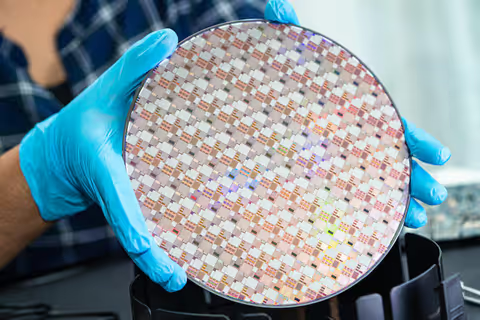
Semiconductor Security Risks in Connected Devices: Understanding Challenges in a Smart Technology Era
Connected devices have become a part of everyday life. Smartphones, smart home systems, wearable gadgets, connected vehicles, healthcare equipment, and industrial machines rely on tiny electronic components called semiconductors. These chips serve as the brains of modern electronics and help devices process data, communicate, and perform tasks.
More gadgets linking up means bigger worries about safety. When chips inside smart tools carry flaws, everything else built on top gets shaky. Strong programs trying to guard data might still fail when the tiny parts underneath hide cracks. Hidden issues deep in the machine often slip past digital shields meant to block harm.
When folks grasp these dangers, better choices around tech durability and online security start to emerge - especially for teams building new tools. A clearer picture of threats shapes how carefully systems get designed. Those using gadgets daily begin spotting weak points earlier. Builders of software adjust plans once hazards come into view. Awareness turns into quieter improvements behind the scenes. Realizing what could go wrong leads to steadier devices over time.
Hidden Threats in Device Chips?
Hidden flaws in computer chips might let hackers break into gadgets or cause systems to fail. These weak spots live inside the tiny parts that power electronics. Trouble starts when bad actors find gaps in how these pieces are built. Tiny errors in design or production open doors for digital attacks. Devices rely on these components staying safe and working right. If a chip has a crack in its armor, everything it runs becomes shaky. Security slips happen even before products leave the factory floor. Some dangers stay quiet until triggered later. Every smart gadget faces risk if its core parts aren’t locked down.
Most old-school cyber defenses spend time guarding code, login details, or online pathways. Yet today's gadgets run deep on silicon parts - so shielding the tiny circuits inside matters just as much.
Common connected devices include:
- Smart speakers
- Wearable devices
- Industrial sensors
- Smart appliances
- Connected healthcare tools
- Automotive systems
- Connected gadgets that talk to each other online
Bent circuits open doors for intruders - sudden glitches let outsiders slip inside machines, twist what they do, or pull out private data without asking.
Semiconductor Security Fundamentals Explained Simply
Inside computers, tiny parts built from substances like silicon handle calculations. Running tasks smoothly, these pieces link different sections of gadgets together.
A connected device often contains multiple chips handling:
Chips that process things run programs along with math operations. Wireless signals get managed by communication-focused chips instead. Information stays put inside memory-based semiconductor units. Encryption together with identity checks rely on security chip designs. Environmental details are gathered using sensor-equipped semiconductors.
A single piece can become a weak spot when safeguards are missing. Security slips through cracks in poor planning. Without care, flaws creep into even small parts. Protection gaps show up where design falls short. Weak construction invites trouble later on.
How Chips Stay Safe Now
Out here, digital links grow faster every year. From living rooms to highways, gadgets talk to one another more each day. Factories hum with sensors that share data without being asked. Networks weave through daily life, often unseen but always active.
Strong semiconductor security can support:
Data Protection
Most gadgets handle private data along with system details. Protection inside the hardware lowers chances of outsiders getting in.
Device Reliability
Faults in physical components might slow things down or cause crashes. Sometimes a glitch in the machine makes it act unreliable.
Supply Chain Trust
From raw materials to final delivery, chips move through many hands. Because trust matters, safeguards protect what they carry.
Infrastructure Protection
Machines used in factories plus vital operations usually rely on parts that link securely. While these connections keep things running, they also create risks if unprotected.
With countless gadgets running everywhere, safeguarding their physical components matters more than ever.
Common Semiconductor Security Threats
Different semiconductor risks can affect connected devices in various ways.
Hardware Trojans
Hidden changes inside computer chips show up when someone slips harmful tweaks into how they are built. These sneaky alterations take root during design or production stages of electronic parts.
Hidden changes like these might:
- Change device behavior
- Built entry spots without permission
- Leak information
- Turn on when certain requirements are met
Running deep in the system makes them hard to spot.
Side-Channel Attacks
Some gadgets give off clues without meaning to - just by how they behave in real life.
Examples include:
- Power consumption patterns
- Electromagnetic signals
- Timing differences
- Heat output
Signals could be studied by those looking to steal private details.
Firmware Vulnerabilities
Firmware runs inside devices, built right into their circuits. It lives beneath the surface, guiding how parts behave without needing updates from outside sources.
Weak firmware protection can create problems such as:
- Unauthorized modifications
- Device control manipulation
- Persistent malware installation
Firmware problems might stay hidden over extended stretches of time.
Supply Chain Risks
Factories spread across continents link tightly in making computer chips. One misstep anywhere slows everything down.
Potential concerns include:
- Counterfeit components
- Unauthorized modifications
- Quality inconsistencies
- Limited visibility across suppliers
Supply chain weaknesses may create additional security concerns.
Inside Semiconductor Security
Fences around gadgets work better when stacked, not left to just one lock. A single shield won’t hold up if the rest are weak. Layers catch what slips past others. Skipping steps leaves gaps someone else might walk through. Stronger when each piece backs up another. Works like walls inside walls - no wide-open doors.
A step-by-step setup usually looks like this:
Secure Design First
From the first sketch of a chip's layout, safety checks take shape. As design progresses, protection methods grow alongside it.
Step 2: Authentication
Devices verify identities before exchanging information.
Step 3: Encryption
Sensitive data is converted into protected formats.
Secure Boot Enabled
Before anything loads, systems check each software part matches known versions. One mismatch stops everything cold.
Monitor and Update
Faults get spotted by makers who then push out updates. When weaknesses appear, fixes follow soon after.
By stacking these layers, risk drops without needing extra steps. Layering cuts down dangers quietly, almost by accident.
Security Features Inside Today’s Computer Chips
Modern semiconductors increasingly include built-in protections.
Common security features include:
Hardware Root of Trust
Built tough so gadgets can run without hiccups. Security kicks in right from the start, holding everything steady behind the scenes.
Secure Enclaves
Running apart from core functions keeps risky tasks contained. Separation helps prevent interference with main operations.
Cryptographic Accelerators
Encryption runs faster when security gets stronger. Performance gains show up where safety matters most.
Tamper Detection
Detects physical attempts to alter components.
Secure Key Storage
Keeps login secrets safe. Encryption codes stay hidden too.
Security gets stronger when these parts connect. A different kind of safety shows up through their link.
latest trends recent updates
More attention has turned toward chip safety lately. Still, questions keep piling up around how well they’re protected.
Increase in Hardware Security Emphasis
Midway through 2024, talks about tech took a sharp turn toward hardware-backed security instead of pure code safeguards. By 2025, chips had become the go-to shield where software once stood alone.
artificial intelligence meets security analysis
Out of nowhere, machine learning spots odd patterns in chips. These tools catch risks before they grow. Not always obvious, but quietly watching - threats show up faster now.
Clearer View of Supply Chain
Fresh efforts push clearer views into how chips are made. Some teams now track each step more openly. Others mix new tools with old methods just to see what sticks. A few plants test live updates straight from machines. Not every attempt works right away. Still, progress creeps forward through trial after trial.
Growth of Secure IoT Architectures
Connected device ecosystems increasingly incorporate dedicated security processors.
When devices link up more closely, the ways we shield computer chips keep shifting. Chips adapt as tech networks grow wider.
common mistakes and things to consider
Yet hardware dangers often slip through when teams pour energy into code protection. A single overlooked circuit can unravel what firewalls tried to shield.
Common considerations include:
Overlooking Supply Chain Checks
Who knows what hidden flaws come with untested parts. A single unknown piece can open doors you did not expect.
Delayed Firmware Updates
Certain older software versions fail to guard against threats.
Software Only Does Not Guarantee Security
Fences guard the yard, while locks secure the door inside. Hardware stands firm where code keeps watch behind it.
Limited Device Monitoring
Watching things closely can reveal actions that stand out. Sometimes odd patterns only show up over time.
Weak Authentication Methods
Using simple login methods can open doors to more dangers.
Fixing these spots might just boost how well the gadget stays safe.
Problems with Chip Safety
Several factors make hardware security difficult.
Challenges include:
- Complex semiconductor designs
- Rapid growth of connected devices
- Global manufacturing networks
- Long device life cycles
- Evolving attack techniques
Working together between makers of devices, programs, and factories is common in security work.
Conclusion
Out of nowhere, tiny chips inside smart gadgets carry hidden dangers. When machines talk to each other, they depend on semiconductors to run tasks and move information. A weak spot in one piece might ripple into bigger network troubles. Because everything links together, a small flaw could shake up entire setups.
Out of today’s tech demands comes a blend of strong design rules alongside login safeguards, data scrambling methods, then layers built into physical chips. When networks keep shifting shape, spotting weak spots in silicon opens paths toward sturdier, steadier online tools.