Semiconductor Manufacturing Process Steps: A Complete Beginner-Friendly Guide
Semiconductors are the foundation of modern electronics, powering devices like smartphones, computers, and automobiles. Understanding the semiconductor manufacturing process steps helps explain how tiny electronic components are created with high precision.
Most industries rely on semiconductor devices now. These parts help complex tech work well, whether it's in hospitals or networks. Equipment stays effective thanks to their presence.
This guide walks through how chips are made, breaking down each stage of semiconductor production without complex terms. One step follows another, showing how tiny circuits come together on silicon. Each phase connects to the next, revealing how integrated circuits take shape gradually. The whole process unfolds clearly, focusing only on what happens and when. Details stay straightforward, avoiding jargon while keeping accuracy intact.
semiconductor manufacturing process explained
Starting with sand, makers shape tiny parts that power devices. One step at a time, they stack thin films under tight control. Each stage adds precision without room for error. From dust-like base to working chip, changes happen slowly but exact.
Key Stages in Semiconductor Production
- Silicon wafer preparation
- Circuit design and layout
- Photolithography
- Etching and doping
- Layer deposition
- Testing and packaging
From start to finish, each phase links into the next, making up how chips are built today in advanced plants.
Semiconductor Production Matters
Chips come first when devices need brains. Building them matters more than most notice.
Why It Matters
- Plenty of gadgets rely on it these days. Phones run smoother because of its role behind the scenes. Computers handle tasks faster thanks to built-in compatibility. Even small connected tools around the house depend on this tech to stay active
- Keeps new ideas moving forward. Vital because machines that learn, smart tools, and how we connect rely on it
- Fine-tuned mechanics work quietly behind the scenes, delivering steady results without fuss. Built to hold up under pressure, they perform exactly when needed - no guesswork involved
- Worldwide financial effects: Electronics sector holds major role
Failing to make chips right means today's gadgets just won’t work properly.
Key Parts of Making Computer Chips
Peeling back what goes into making semiconductors makes it less confusing. Instead of seeing chaos, patterns start showing up when you know the basics.
1. Material: Silicon
Found nearly everywhere, silicon works well for moving electricity. Its common presence makes it a go-to choice across industries.
2. Cleanroom Environment
Fresh air flows through sealed rooms where workers make products. Dust stays out by design, keeping everything pure.
3. Precision Technology
Tiny movements shape what happens here - precision rules every step. A single misstep ruins everything when working this small.
4. Layer-Based Construction
Starting with a base, machines add parts step by step through different making methods. Each stage sticks to the one before, shaped by unique processes that fit together like pieces without needing glue or force.
Semiconductor Manufacturing Process Steps
One step at a time, making chips takes many phases. Here’s how the work unfolds, broken down simply.
Step-by-Step Process
Silicon gets sliced into flat discs first. On top of those, a film forms through heat exposure. Images appear when light touches coated surfaces. Bits vanish where they do not belong anymore. Atoms sneak in to shift how current moves. New coverings settle like fog overnight. Wires link up using shiny conductive sheets. Each tiny unit faces electric checks afterward. Plastic wraps around delicate parts tightly.
1. Wafer Preparation
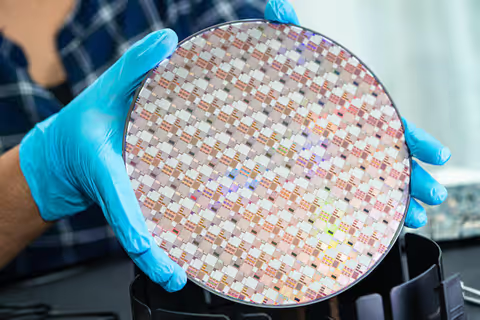
A single silicon crystal kicks things off, cut into delicate slices. From here on out, every move builds on these thin wafers - they’re the starting point.
2. Oxidation
A film of silicon dioxide appears across the wafer's face. It serves to shield while keeping things electrically separate.
3. Photolithography
Light shapes the circuit design on a wafer coated with sensitive film. One key moment in making chips happens here.
4. Etching
Starting with a covered surface, etching strips away what is not needed. The pattern meant to stay remains after the rest vanishes. Where exposure once guided change, now only structure holds firm.
5. Doping
Impurities get added to silicon during doping, shifting how it conducts electricity. Without this shift, making transistors wouldn’t work at all.
6. Deposition
Laying down fine coats of stuff on the wafer forms pieces of the chip piece by piece. While one layer goes on top another shapes what's underneath slowly.
7. Metallization
On top of the base, thin sheets of metal go down to link parts together. Connections happen when these strips bridge gaps across the surface.
8. Testing and Packaging
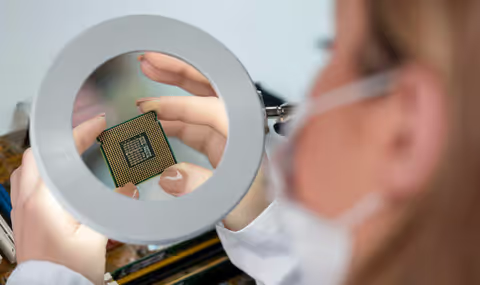
Once made, chips go through testing so their performance can be checked. Following that, packaging shields them from harm.
How the Process Works Together
Layer upon layer, the chipmaking sequence runs again and again to form intricate electronic paths.
Key Workflow
- Patterns are created using photolithography
- Stuff gets put in or taken out by laying down layers or scraping them away
- Adding impurities changes how electricity moves through a material
- Layers are stacked to build complete circuits
With layers stacked like pages, makers build complex chips holding countless tiny switches - some reach into the billions. Each level adds new functions without needing more space on the surface.
Recent Shifts in Chip Production Methods
Faster changes sweep through chip making every day. Chips now adapt quicker than before across factories worldwide.
Recent Developments
- Chips now take up less space because their parts have gotten tinier. Efficiency rises when components shrink down. Tiny structures help each chip do more without needing extra power. Size drops, yet performance holds steady. Miniaturization drives progress behind the scenes. Less room used means devices can slim down too
- Advanced lithography: Use of extreme ultraviolet (EUV) technology
- 3D chip structures: Improved performance and space utilization
- Automation and AI: Enhancing precision and production efficiency
Faster methods now steer how chips come together, boosting results across the board. Step by step, changes push output higher while refining precision behind the scenes.
common mistakes and things to consider
Figuring out what might go wrong tends to make things clearer. Though it takes effort, seeing hurdles ahead often simplifies next steps.
Common Issues
- Contamination risks: Even tiny particles can damage chips
- Not simple to handle. Needs close watching at every step. Each stage must follow exact rules. Mistakes happen if attention slips. Tight oversight keeps things on track
- Mistakes that seem tiny might still shake things up. Performance takes a hit when details slip. Even slight inaccuracies bring shifts. Precision matters because hiccups show fast. Accuracy slips lead to results off track
- Material limitations: Not all materials behave the same way
Important Considerations
- Maintain cleanroom standards
- Use precise equipment calibration
- Monitor each step carefully
- Ensure proper testing before packaging
Conclusion
Starting with pure silicon, each stage unfolds under tight control to build intricate electronics. One step follows another, carefully shaped by precision tools working in sequence. Tiny changes matter greatly when turning basic materials into smart parts. Every move is measured, part of a longer chain leading to functional devices. These operations link together, forming what becomes modern circuitry.
Every stage matters, starting with slicing wafers right through to sealing the finished chip. Peeling back what happens between raw silicon and final seal shows exactly how tiny circuits come together inside today's devices.
Faster progress in tech means chip making keeps pushing new ideas forward in many fields.