Semiconductor Fabrication Plants: A Simple Guide to How Microchips Are Made
Semiconductor fabrication plants, often called “fabs,” are specialized facilities where microchips are manufactured. These chips power everyday devices such as smartphones, computers, and vehicles. Without semiconductor fabrication plants, modern technology would not function as we know it today.
Inside these facilities, delicate parts for gadgets come together - making it possible for computers and phones to work without hiccups. With more people around the world needing smart devices, chip-making factories quietly power progress in how machines talk, learn, and act on their own.
Inside Chip Making Factories
Fine dust can ruin everything, so workers wear sealed suits inside these labs. Machines shape tiny pathways onto flat disks of pure sand stuff using light patterns. Each room stays spotless because even a speck of dirt messes up the details. These factories run complex dances of heat, gas, and chemistry without pause.
Fab labs run by giants such as Intel, TSMC, and Samsung Electronics rank among the world’s most sophisticated. While these facilities push limits in chip making, their scale often surprises outsiders who assume smaller setups can match them. Yet precision tools inside demand extreme control - temperature, air purity, vibration - all tuned tightly. Even so, progress doesn’t come fast; each generation takes years to refine. Still, staying ahead means constant reinvestment just to keep pace.
Key Characteristics
- Extremely clean environments (dust-free conditions)
- Advanced machinery and automation
- High precision manufacturing processes
- Large-scale production capability
Why Chip Factories Matter
Out here, where chips come to life, things matter more than most realize. Without these facilities, the tools we rely on would simply vanish. Hidden inside every smart device, their role shapes how fast progress moves. Step by step, they power what connects us all.
Why They Matter
- Chips keep today’s gadgets running - think phones, computers, even kitchen tools. They hum quietly inside each device, making complex tasks feel light. Without them, screens stay dark, apps freeze mid-thought. Tiny pieces of silicon handle what our minds ask instantly. These slivers of tech bridge clicks to actions, every day.
- Factories making cars rely on tiny chips to function properly. Medical tools used in hospitals run because of these small electronic parts. Phone networks stay active thanks to invisible components working behind the scenes.
- Chips push progress forward - without them, tools such as artificial intelligence would stall. Picture fast networks; they depend on tiny processors working hard behind the scenes. Smarter devices pop up everywhere once these components improve. Breakthroughs wait for better silicon, not just software.
- Factories that make chips get big spending from nations wanting control over tech. Not just money flowing in - goals shift toward self-reliance when global supplies waver.
Types of Semiconductor Fabrication Plants
Fabrication sites for semiconductors aren’t identical in how they run. Differences emerge through their tech priorities along with methods of output.
1. Integrated Device Manufacturers
Folks at these firms dream up circuitry, then build it themselves. Chips born in-house shape what each company creates next.
- Example: Intel
- Full control over production
2. Foundries
Fabrication plants build processors based on blueprints from outside firms.
- Example: TSMC
- Focus on large-scale manufacturing
3. Fabless Model
Some chip makers handle only the blueprint part. Production gets handed off to specialist factories instead.
- Example: Companies that focus only on design
Parts of a Factory That Makes Things
Fine control comes from tools inside a chip factory. Machines place materials with extreme care during buildup stages. Each part works because alignment stays perfect every time. Temperature shifts get managed right away by monitoring systems. Power flows through dedicated lines without interruption. Light patterns shape tiny circuits using special masks. Workers check progress at key moments along the route.
Cleanroom Environment
- Maintains ultra-low contamination levels
- Workers wear protective suits
- Air filtration systems control particles
Equipment and Machinery
- Lithography machines
- Etching systems
- Deposition tools
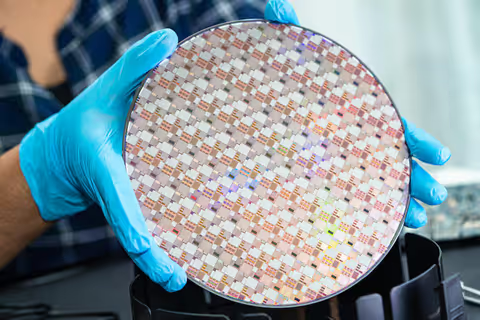
Silicon Wafers
- Thin slices of silicon used as the base material
- Multiple chips are created on a single wafer
Inside Semiconductor Chip Factories
Inside tiny factories, sand becomes something smarter. Step by step, thin slices of crystal collect invisible patterns. One after another, these coatings shape how electricity moves. Little by little, flat surfaces turn into thinking pieces.
1. Wafer Preparation
- Born from raw earth, silicon gets cleaned of impurities. Then thin slices appear, carved like pages from a crystal book. Each wafer forms when molten material cools into solid disks under careful control
2. Photolithography
- Circuit patterns are projected onto the wafer using light
3. Etching
- Unwanted material is removed to form circuit structures
4. Doping
- Some substances get mixed in to change how electricity moves through them
5. Deposition
- Thin layers of materials are added to the wafer
6. Testing and Packaging
- Once checked, chips get ready to go inside gadgets
Semiconductor Manufacturing Steps
Silicon begins as a pure crystal, formed slowly under tight control. Patterns appear on its surface when light traces them precisely. Instead of carving mechanically, charged gas reshapes tiny areas with accuracy. Electric traits change once atoms are shot into specific zones. Thin films build up through chemical reactions in sealed chambers. Each chip proves itself by responding correctly during checks. Machines scan results without human hands guiding the process.
new ways chips are made
Faster changes sweep through chip making. What happens now remakes factories down the line.
Advanced Node Technology
- Smaller transistor sizes (e.g., 3nm, 2nm)
- Higher performance and lower power consumption
automation meets ai
- AI improves manufacturing efficiency
- Predictive maintenance reduces downtime
Sustainability Efforts
- Reduced energy consumption
- Water recycling systems in fabs
Global Expansion
- New fabs being built in multiple regions
- Governments supporting local semiconductor production
Common Considerations and Challenges
Operating semiconductor fabrication plants comes with several challenges that require careful planning.
High Complexity
- Multiple precise steps must be coordinated
- Even minor errors can affect output
Cost and Infrastructure
- Advanced tech is needed along with proper facilities
- Long setup and development timelines
Supply Chain Dependencies
- Materials and equipment must be consistently available
- Global disruptions can impact production
Skilled Workforce
- Requires trained engineers and technicians
- Continuous learning due to evolving technology
Conclusion
Inside giant rooms where dust cannot survive, machines build tiny brains for gadgets we hold daily. These spaces hum with precision tools shaping pieces smaller than a hair's width. Not just assembly lines but realms where science meets exactness in silence. Though unseen by most, their output drives phones, cars, even hospitals without pause. Each step forward here pushes what devices can quietly do tomorrow.
Inside every tiny chip lies a story of complex processes, hidden within massive clean rooms where dust can ruin everything. When machines etch microscopic pathways onto silicon wafers, they build the brains behind modern devices. Though invisible to most users, these facilities power progress in ways few pause to consider. Because new gadgets demand faster processors, factories race to shrink components further. Even as designs shift, one truth holds steady - without them, tomorrow's tools could not exist.